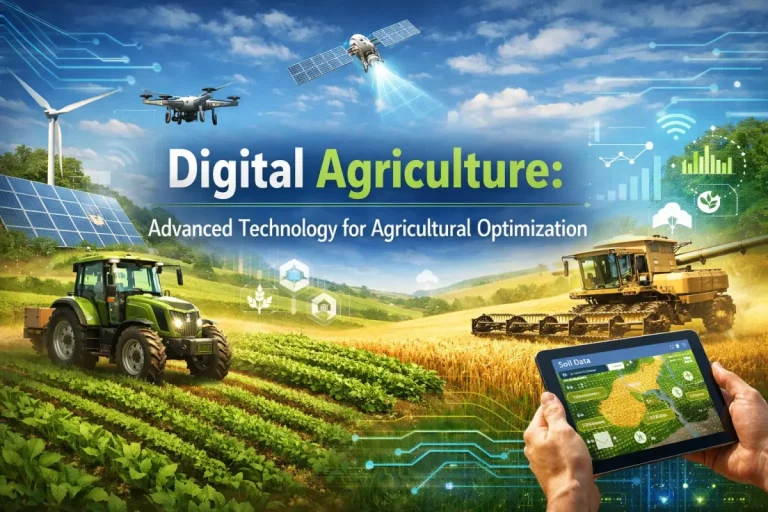
Artificial intelligence is no longer a futuristic concept: it is now at the heart of modern agricultural practices. The AI Farming Trends 2025 report, published this month by Farmonaut, reveals the widespread adoption of AI technologies on large farms, with more than 60% having integrated at least one AI solution into their daily operations. This trend is confirmed by the 2025 Agricultural Innovation Observatory from La Ferme Digitale, which provides a concrete overview of the uses and obstacles encountered by French farmers. A closer look at the uses, benefits, and concrete prospects of this ongoing agricultural revolution. The impact of artificial intelligence in agriculture extends beyond just efficiency improvements; it is also transforming crop management and resource allocation. Farmers are leveraging predictive analytics to optimize yields and reduce waste, ultimately leading to a more sustainable approach to farming. As these technologies continue to evolve, they promise to address environmental challenges and enhance food security on a global scale. As farmers adapt to these technological advancements, the agrifood ecosystem transformations in Europe are becoming increasingly evident. This shift not only enhances production efficiency but also opens up new markets for sustainable practices. By leveraging AI, European agriculture is set to improve food security while addressing environmental challenges.
Mass adoption, targeted uses
AI solutions have become essential strategic management tools for farmers. Their use goes far beyond mere gadgets: they optimize resources, anticipate risks, and secure yields.
1. Precision irrigation (58%)
By analyzing real-time weather data, soil moisture, and crop growth stages, AI enables precise, targeted, and economical irrigation. Water savings of up to 50% have been observed on some grain and fruit farms. The study by La Ferme Digitale also identifies water management as a priority issue for the next two years alongside AI.
2. Disease surveillance using smart imaging
Thanks to sensors mounted on drones or tractors, or via satellite imagery, algorithms detect the first signs of stress or pathogens, well before the human eye. This allows for earlier, more localized interventions, with fewer pesticides.
3. Agricultural robots (44%)
AI embedded in weeding, hoeing, or harvesting robots allows these machines to move autonomously, distinguish cultivated plants from weeds, and operate with extreme precision. These technologies are particularly well-developed in specialized crops such as vineyards and vegetable gardens.
4. Yield Forecast (59%)
Combining weather data, soils, aerial imagery, nd historical production data AI I now offers precise and dynamic yield forecasts per plot, facilitating the organization of harvesting, storage, and commercial planning.
5. Forest and agroforestry monitoring (41%)
AI is also being used in forestry and agroforestry systems to monitor tree health, identify areas of decline, and optimize interventions in cultivated forests.
Concrete examples in France
France is not lagging. Several startups and agricultural cooperatives are already offering concrete solutions to farmers:
Abelio (Brittany): multispectral mapping and AI to adjust nitrogen inputs at the intra-plot scale.
CarbonFarm automatically calculates the carbon sequestered in soils via satellite and AI to generate carbon credits.
Chouette Vision is a tool for diagnosing vine diseases based on AI mounted on vineyard tractors.
What are the benefits for farmers?
The feedback is conclusive:
Plus 20 to 35% productivity gains, depending on the crops. Reduction of inputs (water, fertilizers, pesticides) by up to 40%. Reduced working time thanks to the automation of the most repetitive or low-value-added tasks. Furthermore, according to the Agricultural Innovation Observatory, 0% of farmers have a budget dedicated to innovation over several years, wiwhile0% invest on an ad hoc basis depending on the project. This demonstrates a growing interest in these tools, but also a still cautious approach to their management.
Obstacles to overcome for truly accessible AI
Despite the promises of artificial intelligence for agriculture, its large-scale deployment still faces several major obstacles, particularly in medium-sized farms, isolated rural areas, and agricultural systems in transition.
1. The initial investment cost
Cost remains the main obstacle identified by 81% of French farmers, according to a study by La Ferme Digitale . This includes: – equipment (drones, sensors, weather stations), – specialized software, – subscriptions or licenses that need to be renewed.
2. Unequal access to digital technology across the territory
Some rural areas still suffer from unstable connections orcompletea lack of coverage. However, data synchronization and the use of cloud platforms require reliable and constant connectivity. This technical issue is often an invisible but major obstacle to innovation.
3. Lack of training and support
Two-thirds of the farmers surveyed stated that they need human support to implement innovative solutions. The need for ongoing training remains significant, both in terms of tools and data interpretation. Farmer groups, independent experts, and technical institutes are seen as the most legitimate partners.
4. Questions about data sovereignty
75% of farmers are willing to share their data, provided that transparency, confidentiality, and proper use are guaranteed. This opens the door to big data or collective AI applications, but reinforces the need for clear regulations.
5. Energy and environmental impact
Finally, some voices are being raised about the environmental cost of AI-related infrastructure (servers, data streams, embedded electronics). The challenge of sustainable digital agriculture is becoming a new frontier to explore.
Towards enhanced… but ethical agriculture
As AI establishes itself as a key lever for resilience and performance in agriculture, voices are increasingly calling for an ethical framework: transparency of algorithms, ownership of agricultural data, environmental impact of digital infrastructures… These are issues to be integrated into any agricultural strategy of tomorrow.
In conclusion
AI in agriculture is no longer an option; it’s a crucial tool for technical and economic management, already proven in the field. It’s redefining the role of the farmer, combining agronomic expertise, analytical skills, and precise control. But this transformation will only be inclusive and sustainable if structural barriers (cost, training, connectivity, support) are removed, and if public and private partners genuinely support the ongoing transitions.