Artificial intelligence writing tools such as ChatGPT, Claude, and Gemini are transforming how people create content. From blog posts and marketing emails to essays and product descriptions, AI can produce text in seconds. However, while these tools are powerful, their output often feels robotic or overly formal. This is where an ai humanizer prompt becomes incredibly valuable.
An ai humanizer prompt helps transform stiff, mechanical AI-generated text into natural, engaging writing that sounds like it was written by a human. Instead of rigid sentence patterns and repetitive wording, the text becomes conversational, fluid, and easier to read.
Writers, marketers, students, and businesses now use AI humanization techniques to humanize AI text, improve readability, and create natural sounding AI content. These prompts help rewrite AI text naturally, improve tone, and ensure the writing feels authentic to readers.
In this guide, you’ll learn:
- What an ai humanizer prompt is
- Why AI text often sounds robotic
- How humanizer prompts work
- 10 powerful prompt examples
- Practical tips to make AI writing sound human
- Common mistakes and ethical considerations
Let’s explore how to make AI writing truly sound human.
What Is an AI Humanizer Prompt?
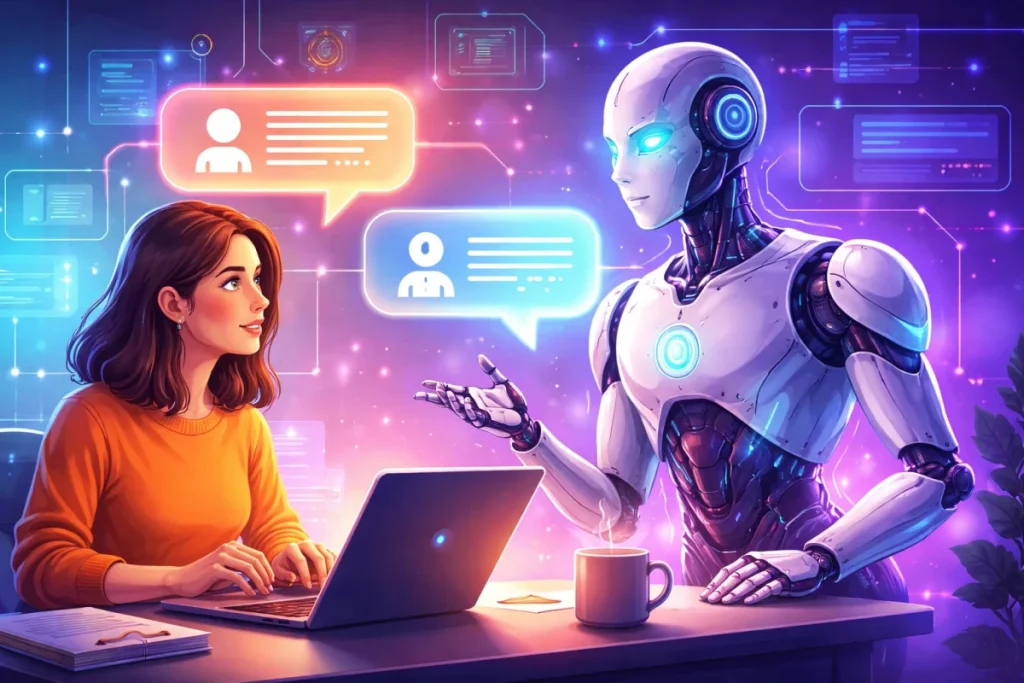
An ai humanizer prompt is a specific instruction given to an AI tool to rewrite or edit AI-generated content so it sounds more natural, conversational, and human-like.
Instead of producing stiff or formulaic writing, the prompt guides the AI to adjust tone, rhythm, sentence variety, and vocabulary. The goal is to make AI writing sound human while keeping the meaning clear and engaging.
Writers often use an AI text humanizer prompt to improve blog posts, emails, marketing copy, essays, and social media content.
Short Answer: What Is an AI Humanizer Prompt?
An ai humanizer prompt is a set of instructions designed to transform robotic AI-generated text into natural, human-like writing.
It typically asks the AI to:
- Rewrite text using a conversational tone
- Vary sentence structure and length
- Replace formal or repetitive wording
- Improve flow and readability
- Add natural phrasing or contractions
These prompts are widely used to rewrite AI text naturally, improve clarity, and create natural sounding AI content for blogs, marketing materials, essays, and emails.
Rather than generating entirely new content, a humanizer prompt focuses on editing and refining AI output so it feels more authentic and engaging to readers.
Why AI-Generated Content Often Sounds Robotic
Even the most advanced AI models rely on statistical patterns in language. While they generate grammatically correct sentences, they sometimes lack the subtle nuances that make writing feel human.
Predictable Sentence Structures
AI frequently produces sentences with similar lengths and patterns. For example:
“This technology is very useful. It helps businesses improve efficiency. It also saves time.”
Humans naturally vary their sentence structures, creating rhythm and flow.
Humanization helps break this pattern by introducing varied phrasing and sentence length.
Overly Formal Language
AI often defaults to formal or academic language. While this may sound professional, it can feel stiff or distant.
Human writing tends to include:
- Contractions
- Casual transitions
- Conversational phrasing
For example:
AI style:
“Furthermore, this methodology enhances productivity.”
Human style:
“And it also helps people work faster.”
Lack of Personal Voice
AI-generated text usually lacks personal touches like:
- Opinions
- Experiences
- Rhetorical questions
These elements make writing feel relatable and engaging.
Repetitive Phrasing
AI can unintentionally repeat phrases or sentence structures throughout a paragraph. Humanization prompts encourage variety and natural language flow.
This improves both readability and reader engagement.
How an AI Humanizer Prompt Works
An ai humanizer prompt works by guiding the AI to edit its own output according to specific stylistic instructions.
Instead of simply rewriting text, the prompt focuses on making structural and tonal improvements.
Step 1: Provide the Original AI Text
The process starts with AI-generated content that may sound rigid or repetitive.
Example:
“Artificial intelligence tools can help writers generate content quickly. They improve productivity and efficiency.”
Step 2: Apply Humanization Instructions
The prompt instructs the AI to adjust:
- Tone
- Sentence variety
- Vocabulary
- Flow
Example instruction:
“Rewrite the following text in a natural, conversational tone. Vary sentence lengths, add transitions, and ensure it reads like human writing.”
Step 3: Improve Sentence Rhythm
Human writing alternates between short and longer sentences. Humanization prompts encourage this rhythm.
Step 4: Simplify Complex Language
Many prompts instruct AI to replace overly formal or technical phrases with simpler language.
This improves accessibility and readability.
Step 5: Enhance Natural Flow
Finally, the AI reorganizes sentences so the content reads smoothly.
The result is human-like AI writing prompts that produce more engaging content.
10 Powerful AI Humanizer Prompt Examples

Here are practical examples of prompts used to humanize AI text.
1. Blog Post Humanizer Prompt
Prompt:
“Rewrite this blog content to sound natural and conversational. Vary sentence lengths, remove repetitive phrasing, and ensure it reads like a human-written article.”
Before
“Content marketing strategies are important for businesses.”
After
“Content marketing plays a huge role in helping businesses grow and connect with their audience.”
2. Essay Rewriting Prompt
“Rewrite this essay to improve readability while keeping an academic tone. Vary sentence structure and simplify overly complex wording.”
3. Marketing Copy Humanizer Prompt
“Rewrite this marketing text so it sounds persuasive but natural. Avoid robotic phrasing and focus on engaging language.”
4. Email Rewriting Prompt
“Rewrite this email so it sounds friendly and conversational while staying professional.”
5. Conversational Tone Prompt
“Edit this text to sound like a natural conversation. Use contractions and vary sentence lengths.”
6. Storytelling Prompt
“Rewrite this content with storytelling elements and emotional tone while maintaining clarity.”
7. SEO Article Humanization Prompt
“Rewrite this AI-generated SEO article to improve readability and human tone while keeping the keywords intact.”
8. Social Media Rewrite Prompt
“Rewrite this text for social media using simple, engaging language.”
9. Academic Text Simplification Prompt
“Rewrite this academic paragraph in simpler language while preserving the original meaning.”
10. ChatGPT Humanizer Prompt
“Rewrite the following AI-generated text to sound like it was written by a human. Add natural phrasing, varied sentence structures, and conversational flow.”
Best Use Cases for AI Humanizer Prompts
Humanizer prompts are useful in many writing contexts.
Blogging
Blog content benefits greatly from natural sounding AI content. Humanized text improves readability and engagement.
Content Marketing
Brands often use AI text rewriting prompts to polish AI-generated marketing materials.
Academic Writing
Students may use humanization prompts to improve clarity and flow in essays or research summaries.
Social Media Content
Conversational tone is essential for social media posts.
Email Communication
Emails sound more authentic when rewritten with a human tone writing prompt.
Copywriting
Marketing copy must connect emotionally with readers, making humanization especially important.
Tips to Make AI Writing Sound More Human
Here are simple strategies that improve AI writing quality.
Vary Sentence Length
Mix short and longer sentences to create natural rhythm.
Use Contractions
Contractions such as don’t, it’s, and you’re make writing feel conversational.
Add Rhetorical Questions
Questions can engage readers and make content feel more interactive.
Example:
“Ever wondered why AI writing sometimes feels robotic?”
Include Storytelling Elements
Stories help readers connect emotionally with the content.
Avoid Repetitive Vocabulary
Use synonyms and varied phrasing.
Add Transitional Phrases
Transitions such as however, for example, and on the other hand improve flow.
Tools That Help Humanize AI Text
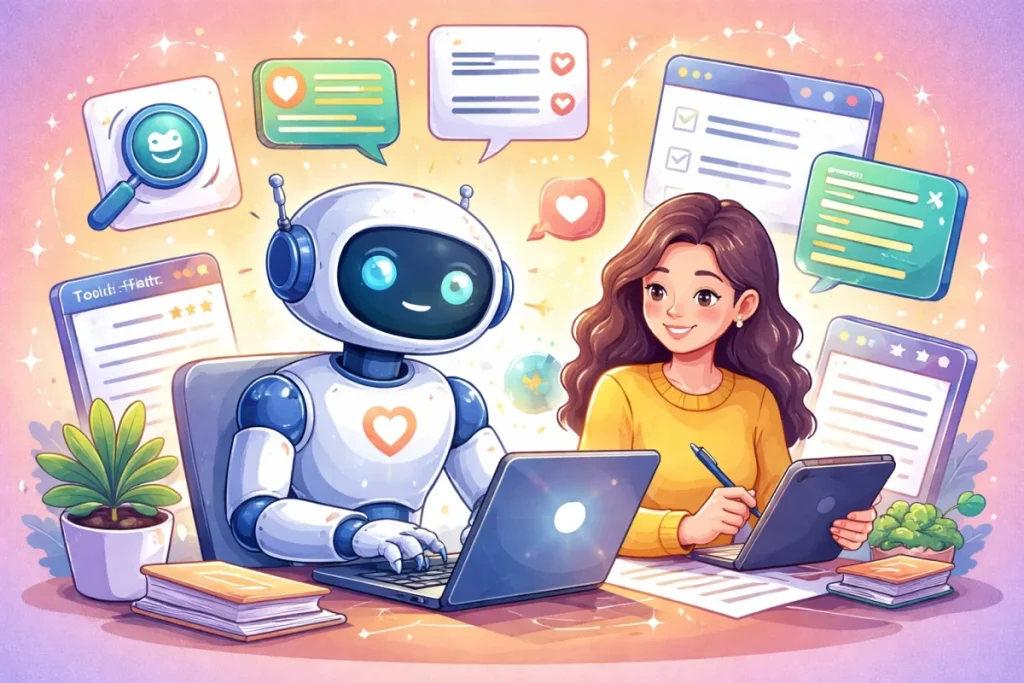
While prompts are powerful, editing tools can also improve human-like writing.
ChatGPT Editing Prompts
Custom ChatGPT editing prompts help refine AI-generated text quickly.
Grammarly Tone Adjustments
Grammarly can adjust tone and clarity.
AI Rewriting Tools
Some tools specialize in rewriting AI content to improve natural flow.
Content Editing Platforms
Platforms like Hemingway Editor improve readability.
You can also explore this related AI writing article.
Common Mistakes When Using AI Humanizer Prompts
Even effective prompts can produce poor results if misused.
Over-Editing
Too many edits can distort the original meaning.
Losing Clarity
Humanization should improve readability, not make text confusing.
Forced Casual Tone
Not all content should sound informal. Academic and professional writing still require balance.
Ignoring Context
Humanization must preserve the original message and audience.
Keyword Stuffing
Overusing keywords harms readability and SEO performance.
Ethical Considerations of AI Humanization
Humanizing AI content raises important ethical questions.
Transparency
Some industries require disclosure when content is AI-assisted.
Academic Integrity
Students should follow their institution’s policies regarding AI writing tools.
Responsible AI Use
Humanized AI content should still be fact-checked and verified.
Avoiding Misinformation
AI-generated content must always be reviewed for accuracy.
FAQs About AI Humanizer Prompt
What is the best ai humanizer prompt?
The best prompt instructs AI to rewrite text with varied sentence structures, conversational tone, and improved readability while preserving the original meaning.
Can AI text really sound human?
Yes. With effective prompts and editing, AI text can become significantly more natural and engaging.
Are AI humanizer prompts effective?
Yes. They help improve tone, readability, and flow, making AI-generated content more relatable to readers.
Do humanized AI texts pass AI detection tools?
Humanized text may appear more natural, but detection tools vary widely in accuracy and methodology.
How can I make AI writing less robotic?
Use prompts that encourage sentence variation, conversational tone, contractions, and natural phrasing.
Is it ethical to humanize AI content?
Humanizing AI content is generally acceptable when used responsibly and transparently.
What are AI editing prompts?
AI editing prompts are instructions that guide AI tools to revise and improve existing text instead of generating new content.
Final Thoughts – The Future of AI Humanized Writing
AI writing tools are evolving rapidly, and the demand for human-like AI writing prompts continues to grow. As more businesses and creators rely on AI, the ability to refine and humanize AI-generated text will become increasingly important.
An effective ai humanizer prompt helps bridge the gap between machine-generated language and authentic human communication. By adjusting tone, rhythm, and phrasing, writers can create content that feels natural while maintaining efficiency.
The future of content creation will likely involve collaboration between human creativity and AI capabilities. Writers will increasingly act as editors, guiding AI output through thoughtful prompts and careful refinement.
When used responsibly, AI humanization techniques can improve writing quality, enhance readability, and help creators produce content that truly connects with readers.