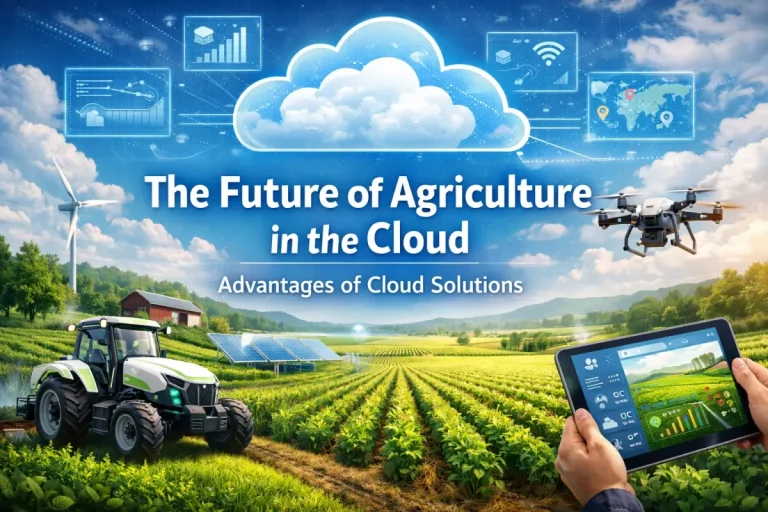
Agriculture faces unprecedented challenges: feeding 10 billion people by 2050 while reducing its environmental impact. Faced with this complex equation, artificial intelligence is profoundly transforming the agricultural sector. From sensors in the fields to drones flying over crops, and including optimization algorithms, farms are becoming veritable technological hubs. This digital transformation promises precision agriculture that is resource-efficient and adapted to current climate constraints, while also redefining the role of the farmer. As ai innovations for large agriculture continue to emerge, they are enhancing crop yields and streamlining supply chains. These advanced technologies enable farmers to make data-driven decisions, optimizing resource allocation and minimizing waste. The integration of machine learning and predictive analytics further empowers agricultural practices to be sustainable and resilient in the face of a changing climate.
The technological foundations of connected agriculture
Connected agriculture relies on a complex technological ecosystem where artificial intelligence plays a central role. This digital transformation begins with the massive collection of data via sensors installed in fields, soils, and on agricultural equipment. These devices measure a multitude of parameters in real time: soil moisture, temperature, nutrient levels, plant growth, and livestock behavior. The deployment of IoT (Internet of Things) networks specifically adapted to rural areas forms the backbone of this digitized agriculture. These communication infrastructures, often based on low-power technologies such as LoRaWAN or Sigfox, enable data transmission from sometimes isolated areas to processing centers. At the heart of this system are machine learning algorithms that transform this raw data into actionable insights. These mathematical models analyze the complex correlations between different variables to generate predictions and recommendations. They continuously improve as they are exposed to more data, refining their predictive capabilities season after season. Cloud infrastructure plays a crucial role in this architecture by providing the computing power needed to process these massive volumes of data. Platforms specializing in precision agriculture now integrate AI modules capable of interpreting satellite images, modeling crop growth, and optimizing farming practices. User interfaces, in the form of mobile applications or dashboards, constitute the final link in this technological chain. They transform complex analyses into clear visualizations and actionable recommendations for farmers. This democratization of decision-support tools makes AI accessible even to small farms, without requiring advanced technical skills.
Resource optimization and environmental sustainability
One of the major contributions of AI to agriculture lies in the precise optimization of agricultural inputs. Thanks to prescription maps generated by algorithms, farmers can now apply the precise dose of fertilizer, water, or pesticides, exactly where and when crops need it. This variable-rate application approach allows for significant reductions in inputs, with documented decreases of 15 to 30% depending on the farm, while maintaining or improving yields. Water management is particularly benefiting from this digital revolution. AI-driven smart irrigation systems analyze weather forecasts, soil moisture at different depths, and the specific water needs of crops to optimize every drop of water. In a context of increasing water stress, these technologies enable significant water savings, up to 40% in some arid regions. In terms of energy, AI helps reduce the carbon footprint of farms by optimizing the movement of agricultural machinery. Route-planning algorithms calculate optimal trajectories for tractors and other equipment, reducing fuel consumption and soil compaction. Some pioneering farms report fuel consumption reductions of around 20% thanks to these systems.
Targeted pest control
Image recognition using computer vision is transforming crop protection. Cameras mounted on tractors or drones precisely identify weeds, enabling targeted mechanical or chemical weeding. This ultra-localized spraying approach can reduce herbicide use by more than 80% compared to conventional treatments. Similarly, early detection of plant diseases through image analysis allows for intervention before infection spreads, limiting the environmental impact of treatments. Predictive models integrate meteorological data and field observations to anticipate phytosanitary risks and optimize interventions. This AI-guided precision agriculture is fully aligned with the agricultural sector’s ecological transition goals, reconciling economic performance with respect for ecosystems. It offers concrete solutions for reducing agriculture’s environmental footprint while maintaining its productive capacity in the face of global food challenges.
Improving farm productivity and profitability
Integrating AI into agricultural practices generates substantial productivity gains while reducing operating costs. Predictive algorithms enable farmers to accurately forecast crop yields, providing them with valuable insights for their business and logistical decisions. Recent studies show that these forecasts now achieve over 90% accuracy several weeks before harvest. Predictive maintenance of agricultural equipment is another application with a significant economic impact. By analyzing data from sensors installed on the machines, AI detects early warning signs of technical failures, allowing intervention before a breakdown occurs during critical periods. This proactive approach reduces costly downtime and extends equipment lifespan. In livestock farming, animal monitoring systems are transforming herd management. Connected collars or ear tags track the activity, rumination, and movements of each animal, while algorithms analyze these behaviors to detect diseases, heat cycles, or calvings early. This automated detection significantly improves animal health while reducing veterinary costs and losses. Optimizing crop operations using AI makes it possible to identify ideal intervention windows based on weather forecasts and crop conditions. These personalized recommendations maximize the efficiency of agricultural work, whether it involves sowing, treatments, or harvesting. On large farms, this optimized planning can represent significant savings in labor and input consumption. From a business perspective, AI-powered decision-support tools assist farmers in their marketing strategies. By analyzing agricultural price trends, foforecastingemand, and production costs, these solutions suggest opportune times to sell crops or purchase inputs. This business intelligence, accessible directly from a smartphone, helps secure margins in a context of high volatility in agricultural markets.
Average reduction in input costs: 15-25% depending on the crops
Documented increase in yields: 7-12% on highly digitized farms
This combination of input savings and improved yields significantly enhances the profitability of farms engaged in connected agriculture, while reducing their exposure to climatic and economic risks. As farms increasingly adopt agrifood industry innovations with AI, they are able to optimize resource allocation and improve operational efficiency. These technologies not only lead to better decision-making but also encourage sustainable practices that benefit both the environment and the bottom line. Ultimately, harnessing AI in agriculture enhances food security and supports the growth of local economies. Farmers are increasingly turning to precision agriculture technologies available today, which provide them with real-time data to make informed decisions. By leveraging these advanced tools, growers can monitor crop health, soil conditions, and weather patterns more effectively than ever before. This integration of technology not only maximizes yields but also contributes to the long-term sustainability of agricultural practices. The ongoing digital transformation in agriculture is paving the way for innovative farming techniques that are more resilient to changing conditions. By leveraging data analytics and precision farming tools, farmers can better anticipate challenges and adapt their strategies accordingly. This digital shift not only boosts productivity but also creates opportunities for farmers to engage directly with consumers through e-commerce platforms.
The human and societal challenges of digital agriculture
The widespread adoption of AI technologies in agriculture raises significant questions about accessibility and inclusion. The initial cost of connected equipment, sensors, and specialized software can represent a substantial investment, particularly for small farms. This economic reality risks creating a digital divide in agriculture, where only large operations could fully benefit from these innovations. However, alternative models are emerging, such as shared services or subscription-based models, which are gradually democratizing access to these technologies. Skills development is another major challenge. The farming profession is evolving towards a hybrid profile, combining traditional agronomic expertise with mastery of digital tools. This shift requires substantial training support, particularly for generations of farmers less familiar with technology. Chambers of agriculture and training organizations are adapting their programs to integrate these new dimensions, but the effort remains considerable. The issue of agricultural data sovereignty is generating increasing debate. The information collected on farms represents strategic capital coveted by various actors in the value chain. Farmers must retain control of their data while benefiting from the value-added services it enables. Initiatives such as the Data-Agri charter in France are laying the groundwork for the ethical and transparent use of this data, but the legal framework still needs strengthening.
Social acceptability and ethics
The image of highly technological agriculture can clash with societal expectations for a return to practices perceived as more natural. Communication surrounding these innovations should therefore emphasize their positive contribution to environmental issues and product quality, rather than solely their technological dimension. Increasing automation also raises questions about the future of agricultural employment. While some arduous or repetitive tasks can be delegated to robots, connected agriculture simultaneously creates new, high-value-added technical jobs. This reconfiguration of agricultural work must be managed carefully to avoid exacerbating rural depopulation. These human and societal challenges remind us that the transition to digital agriculture must be part of a holistic vision, where technology remains a means to serve shared agronomic, environmental, a nd social objectives, rather than an end in itself.
The new agricultural horizon: collective intelligence and territorial resilience
Beyond individual farm operations, agricultural AI is paving the way for unprecedented forms of collective territorial intelligence. Aggregated and anonymized data from multiple farms makes it possible to identify trends across a production basin, providing farmers with a valuable benchmark for comparison. These collaborative approaches transform individual practices into a form of ongoing collective experimentation, where everyone benefits from the lessons learned by all. Predictive models gain power and accuracy when informed by this diversity of experiences and contexts. An early warning system for plant diseases will be all the more effective if it can detect the first outbreaks across a given territory and anticipate their spread. This collective dimension represents a major shift from traditional approaches focused on isolated farms. Connected agriculture fosters the emergence of smart territorial ecosystems where producers, processors, and distributors share common digital infrastructures. These collaborative platforms optimize logistics flows, reduce waste, and strengthen short supply chains. They enable the precise alignment between local production and territorial needs, thus contributing to greater regional food self-sufficiency. Faced with climate challenges, these territorial approaches strengthen collective resilience . Decision-support algorithms now incorporate climate scenarios to support the adaptation of agricultural systems. They can suggest varietal changes, modifications to crop calendars, or new agronomic practices based on localized climate change projections. This systemic vision of connected agriculture goes beyond simple techno-economic optimization to embrace a regenerative approach to land. AI then becomes a tool at the service of agriculture that not only produces food but also actively restores the ecosystems on which it depends. Pioneering projects demonstrate how digital technologies can contribute to soil regeneration, biodiversity preservation, and carbon sequestration, all while maintaining the economic viability of farms. The rise of this connected, territorial agriculture is reshaping the role of the farmer, transforming them from a simple producer of raw materials into a manager of complex ecosystems. This evolution enhances their societal and environmental role, while simultaneously creating new sources of value linked to the ecosystem services they provide. Agricultural AI, initially deployed to optimize production, thus finds its full expression in this holistic vision where economic performance and ecological regeneration converge towards a common goal.