The audiobook market is booming—and authors are racing to keep up. If you’re searching for the best ai tool to turn your book into an audiobook, you’re not alone. Hiring a professional narrator can cost thousands of dollars, and production timelines often stretch for months. For indie authors, coaches, and digital publishers, that barrier is real.
Artificial intelligence has changed the equation. Today’s AI voice generator platforms and neural TTS (text-to-speech software) systems can produce surprisingly realistic AI voices at a fraction of the cost. But not all audiobook narration software is equal.
This guide breaks down the tools, the economics, and the strategic decision-making behind choosing the best ai tool to turn your book into an audiobook in 2026.
Why Authors Are Turning to AI for Audiobook Production
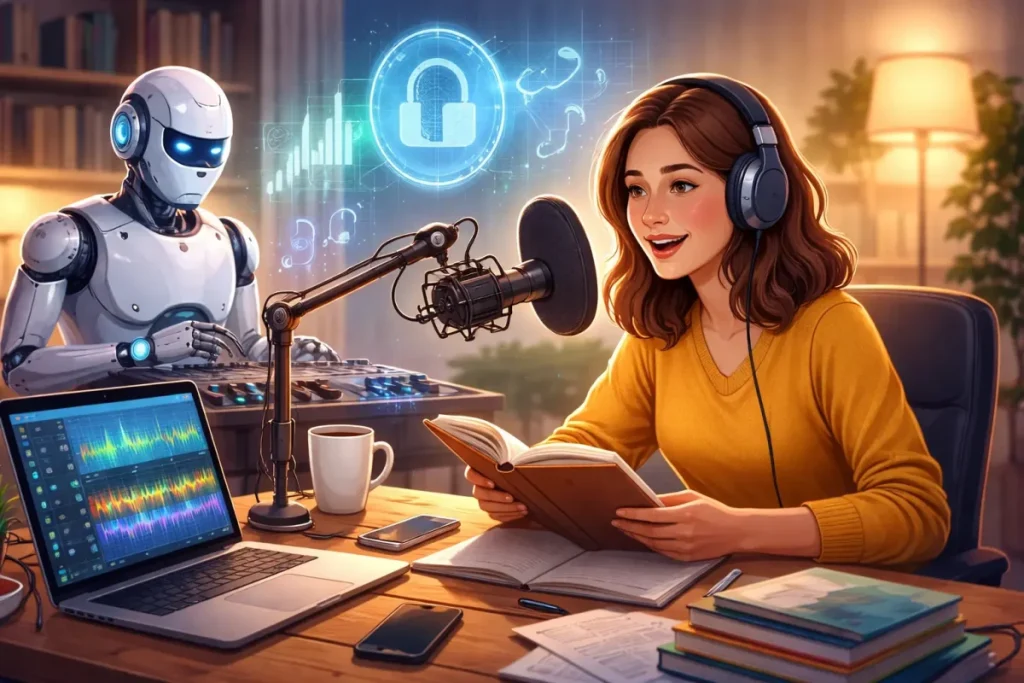
Audiobooks are no longer optional. They’re a revenue channel.
According to industry data from Amazon Audible, audiobook consumption continues to grow year over year, with millions of active listeners globally. Self-published authors now see audio as a serious monetization path—not just an add-on.
Here’s why AI-powered audiobook production is accelerating:
1. Traditional Narration Is Expensive
Professional narrators typically charge:
- $150–$400 per finished hour (PFH)
- A 10-hour audiobook can cost $1,500–$4,000+
- Studio editing adds additional costs
For first-time authors, that’s a major investment.
2. Production Timelines Are Long
Hiring a narrator involves:
- Auditions
- Contract negotiation
- Recording sessions
- Editing & mastering
This can take 4–12 weeks.
AI speech synthesis can produce a full draft in hours.
3. The Indie Publishing Boom
Self-publishing tools have lowered barriers to entry. Authors now control:
- Ebook publishing
- Print-on-demand
- Direct sales funnels
Audiobooks were the last expensive frontier.
AI closes that gap.
4. Scalability
If you publish multiple books, AI voice cloning and neural TTS allow you to:
- Maintain voice consistency
- Rapidly produce sequels
- Localize into multiple languages
For authors treating publishing as a business, this scalability matters.
What Makes the Best AI Tool to Turn Your Book Into an Audiobook?
Choosing the best ai tool to turn your book into an audiobook requires more than just “good voice quality.”
Here’s what truly matters:
Voice Realism
The best platforms use neural TTS models trained on large voice datasets. Look for:
- Natural pacing
- Human-like breathing patterns
- Minimal robotic artifacts
Emotional Control & Prosody
Flat narration kills engagement.
Strong audiobook narration software should allow:
- Tone variation
- Emphasis control
- Pause adjustments
- Speed customization
Voice Cloning Capabilities
AI voice cloning allows:
- Replicating your own voice
- Creating consistent character voices
- Branding across books
Not all platforms offer commercial-safe cloning.
Editing & Script Tools
The best tools integrate:
- Text-based waveform editing
- Filler removal
- Noise reduction
- Paragraph-level control
Platforms like Descript shine here.
Export & Distribution Formats
For audiobook distribution via ACX or Findaway, you need:
- High-quality MP3 files
- Correct RMS levels
- Proper chapter segmentation
Commercial Licensing
This is critical.
Before choosing any AI voice generator, confirm:
- You retain commercial rights
- Platform permits audiobook resale
- Terms align with Amazon Audible & ACX policies
For reference, ACX guidelines are available here.
Best AI Tool to Turn Your Book Into an Audiobook – Top Platforms Compared
Below are the leading contenders in 2026.
1. ElevenLabs
- Industry-leading realistic AI voices
- Strong emotional range
- Advanced AI voice cloning
- Flexible pricing
Best for: Authors prioritizing realism.
2. Play.ht

- Large voice library
- Commercial licensing options
- Solid neural TTS engine
Best for: Corporate narration and nonfiction.
3. Murf AI

- Strong UI
- Good voice variety
- Simple subscription model
Best for: Beginners.
4. Descript
- Powerful editing suite
- Integrated recording & editing
- Voice cloning via Overdub
Best for: Authors who want production control.
5. Speechify Studio (Emerging Competitor)
- Rapid growth
- Easy usability
- Good mobile optimization
Best for: Quick conversions.
Feature Comparison Table
| Tool | Voice Quality | Voice Cloning | Pricing Model | Commercial Rights | Ease of Use | Best For |
|---|---|---|---|---|---|---|
| ElevenLabs | Excellent (near-human) | Yes (advanced) | Subscription + usage | Yes (with plan) | Moderate | Professional audiobooks |
| Play.ht | Very Good | Limited cloning | Subscription tiers | Yes | Easy | Nonfiction & business books |
| Murf AI | Good | Limited | Subscription | Yes | Very Easy | First-time authors |
| Descript | Very Good | Yes (Overdub) | Subscription | Yes | Moderate | Editing-heavy workflows |
| Speechify Studio | Good | No | Subscription | Limited | Very Easy | Quick audiobook drafts |
Professional Assessment
After testing these platforms across long-form fiction and nonfiction manuscripts:
- ElevenLabs currently delivers the most realistic AI voices.
- Descript offers unmatched editing flexibility.
- Murf AI is the easiest onboarding experience.
If voice realism is your top priority, ElevenLabs leads. If you value workflow control, Descript is compelling.
AI vs Human Narrators – Which Is Better in 2026?
Comparison Table
| Factor | AI Narrator | Human Narrator |
|---|---|---|
| Cost | $20–$200/month | $1,500–$4,000 per book |
| Speed | Hours to days | Weeks |
| Emotional Depth | Improving, but limited | Excellent |
| Scalability | Extremely scalable | Limited |
| Long-Term ROI | High for multi-book authors | Variable |
When AI Wins
- Nonfiction books
- Business content
- Educational material
- Authors with multiple titles
- Budget-conscious creators
When Humans Still Win
- Emotionally rich fiction
- Complex character dialogue
- Literary novels
Hybrid Model
Some authors:
- Use AI for drafts
- Hire human narrators for final polishing
- Blend AI narration with light human editing
This hybrid approach is gaining traction.
Step-by-Step: How to Turn Your Book Into an Audiobook Using AI
1. Prepare Your Manuscript
Remove:
- Formatting artifacts
- Footnotes
- Visual references
Clean text improves speech synthesis output.
2. Choose Your AI Voice Generator
Select based on:
- Genre
- Tone
- Audience
3. Generate Initial Narration
Upload manuscript into your chosen text-to-speech software.
Break into chapters.
4. Edit Pacing & Tone
Adjust:
- Pauses
- Speed
- Emphasis
Platforms like Descript make this easier.
5. Export in ACX Format
Ensure:
- Proper bit rate
- RMS levels
- Chapter consistency
6. Distribute
Options include:
- ACX (Amazon Audible)
- Findaway Voices
- Direct sales via Shopify
Limitations of AI Audiobook Tools
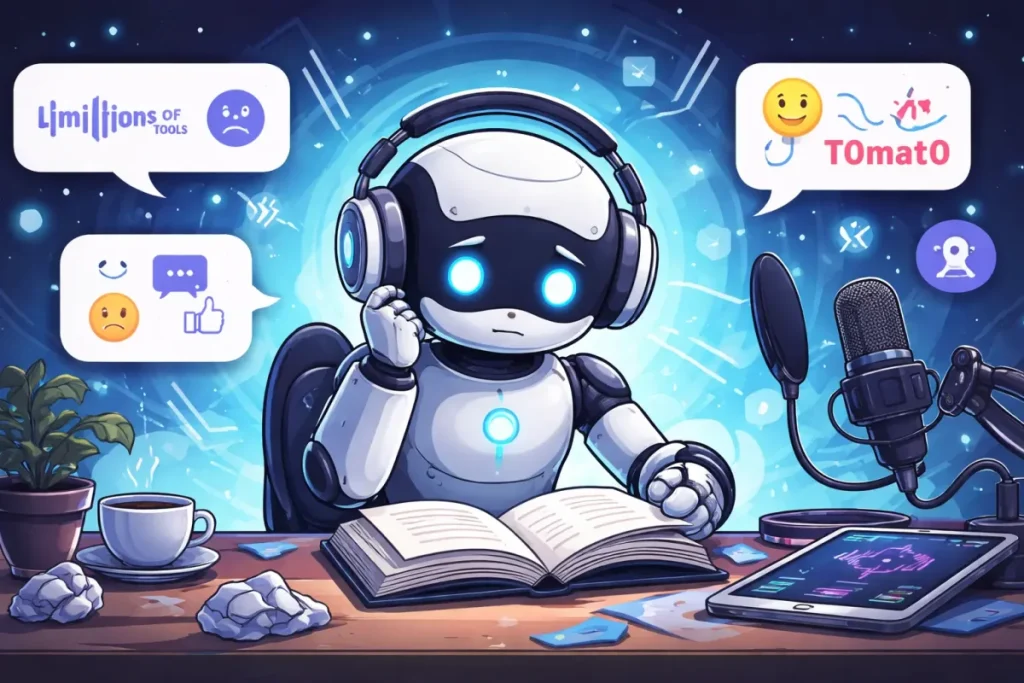
AI narration is powerful—but imperfect.
Emotional Nuance
Romantic tension or grief scenes can feel slightly mechanical.
Character Differentiation
Distinct voices across large casts remain challenging.
Long-Form Listening Fatigue
Subtle synthetic patterns may become noticeable over 8–10 hours.
Licensing Risk
Always review platform terms. Policies evolve quickly.
Cost Breakdown – Is AI Audiobook Production Really Cheaper?
Let’s compare a 10-hour audiobook:
Human Narrator
- $250 PFH × 10 hours = $2,500
- Editing: $500
- Total: ~$3,000
AI Production
- $99/month subscription
- 1–2 months production time
- Total: $100–$200
Even factoring editing time, AI can reduce costs by 90%+.
ROI Scenario
If your audiobook sells for $19.95:
- 200 sales = ~$4,000 gross revenue
- AI production reaches break-even much faster
For authors publishing multiple titles, the economics are compelling.
Final Verdict: What Is the Best AI Tool to Turn Your Book Into an Audiobook?
After evaluating realism, scalability, cost, and commercial licensing:
ElevenLabs is currently the best ai tool to turn your book into an audiobook for most professional authors.
Why?
- Most realistic neural TTS engine
- Strong emotional control
- Robust AI voice cloning
- Commercial-safe plans
However:
- Choose Descript if editing precision matters more than voice realism.
- Choose Murf AI if simplicity is your priority.
- Choose Play.ht for corporate nonfiction and multilingual needs.
The right decision depends on your publishing strategy.
If you’re building a scalable author business, AI audiobook production is no longer experimental—it’s strategic.
FAQs About AI Audiobook Creation
1. Can AI audiobooks be sold on Audible?
Yes, provided they meet ACX technical standards and comply with platform policies.
2. Is AI narration allowed on ACX?
Yes, but you must follow current disclosure and production guidelines.
3. Do AI voices sound realistic?
Modern neural TTS systems sound surprisingly natural, especially platforms like ElevenLabs.
4. Is AI voice cloning legal?
It depends on consent and licensing. Only clone voices you own or have rights to use.
5. Can AI narrate fiction effectively?
Yes, though highly emotional literary fiction may still benefit from human narration.
6. How long does AI audiobook production take?
Most books can be generated and edited within days instead of weeks.
7. Is AI audiobook production worth it for first-time authors?
If budget constraints exist, AI significantly lowers the barrier to entry.
The audiobook industry is evolving quickly. The tools are improving monthly. For independent authors and digital publishers, the best ai tool to turn your book into an audiobook isn’t just about voice quality—it’s about economics, control, and long-term scalability.
Choose strategically, produce efficiently, and treat audio as a serious revenue channel—not an afterthought.