Choosing between Grok and Perplexity has become a real decision in 2026, particularly as advancements in AI models like Claude and Gemini continue to emerge, allowing users to utilize large language models more effectively. Both tools are powerful AI, but they are built for very different purposes, catering to distinct user needs in the realm of professional research. That’s exactly why so many users are searching for a clear answer to Grok vs Perplexity in the context of the AI landscape.
At first glance, both look like AI chat tools. But in reality, they solve completely different problems, which is crucial for market research.
Grok focuses on real-time conversations, trends, and fast answers, making it a strong contender in the perplexity vs Grok debate, especially when considering the capabilities of large language models. Perplexity, on the other hand, is designed for accurate, source-based research and structured information, which may not appeal to those seeking a more creative AI language experience.
This difference matters more than most people think. Picking the wrong tool can lead to inaccurate results, wasted time, or even poor decisions if you rely on AI models for work or research.
In this guide, you’ll learn about various AI models including Grok and Perplexity.
- The key differences between Grok and Perplexity
- Which AI model performs better in real-world scenarios?
- Where each one clearly wins (and loses)
- How to choose the right tool for your specific use case, considering that grok excels in casual settings while perplexity is better for research.
By the end, you’ll know exactly which one is better for you.
Grok vs Perplexity — Which One Is Better? (Quick Answer)
If you want a fast and honest answer, here it is:
Perplexity is the better choice for most users, especially when accuracy and research matter. Grok, however, is stronger when it comes to real-time information and content creation.
The difference becomes clear when you look at how each tool is designed.
- Perplexity wins in professional research:
- factual accuracy
- research and citations
- structured answers
- coding and technical tasks
- Grok wins in the AI landscape:
- real-time information
- Trend awareness is crucial for users who want to stay ahead in their fields, and Grok offers tools to facilitate this, particularly in the context of Perplexity and Grok.
- creative writing
- conversational tone
This leads to a simple rule you can follow for structured reasoning in complex research.
If you need reliable, source-backed information, go with Perplexity for research. If you want fast, engaging answers or content ideas, Grok is often the better choice.
There is no universal “winner” for every situation, but for most serious use cases, Perplexity might have the edge.
Quick Comparison: Grok vs Perplexity
Before going deeper, it helps to understand the core difference in one sentence, especially how each tool approaches AI language processing.
Grok behaves more like a fast, conversational chatbot, while Perplexity acts like an AI-powered research engine.
This distinction affects everything from accuracy to usability.
Here’s a quick breakdown of how they compare for pro users:
- Grok:
- optimized for speed and conversation
- strong in real-time and trending topics
- more creative and expressive
- Perplexity: a versatile AI model that enhances your research capabilities.
- optimized for accuracy and research
- provides citations and sources
- more structured and analytical
The biggest gap between the two is not features, but purpose, highlighting how Perplexity AI emphasizes accuracy. Grok prioritizes experience and immediacy, while Perplexity prioritizes correctness and trust.
What Is Grok?
Grok is an AI chatbot developed by xAI, designed to deliver fast, conversational responses with a strong focus on real-time information. It is closely connected to the X ecosystem, which gives it an advantage when dealing with current events and trending topics.
Unlike traditional AI tools, Grok is built to feel more dynamic and human-like in conversations. This makes it especially useful for quick interactions, brainstorming, and content creation.
Key Features of Grok
Grok stands out because of its speed and real-time awareness. It is designed to respond quickly and keep conversations flowing naturally.
- Real-time information access (especially from social and trending sources) is where Grok often excels.
- Conversational tone with personality
- Fast response generation
- Strong performance in creative writing tasks
Strengths of Grok
Grok performs best in situations where speed and engagement matter more than precision. It is particularly useful for users who want quick insights without deep verification.
- Great for trending topics and live updates
- More natural and engaging responses can be achieved by using chatgpt alongside Grok, which supports multi-step research.
- Strong for brainstorming and content ideas
- Feels more interactive than most AI tools
Limitations of Grok
Despite its strengths, Grok has clear weaknesses when it comes to reliability and depth, which can be critical in research papers, highlighting the limitations of Grok features in comparison to deep research tools. It is not designed as a research tool.
- Less reliable for factual or academic content, making it challenging for pro users to trust its output.
- Limited support for citations and sources
- Can simplify or generalize complex topics, allowing users to leverage powerful AI for better understanding, especially when perplexity might provide deeper insights.
- Not ideal for professional or data-heavy use cases
The key takeaway is simple. Grok is excellent for speed and creativity, but not for accuracy-critical tasks, especially in complex research.
What Is Perplexity?
Perplexity AI is an AI-powered answer engine that focuses on delivering accurate, source-backed information. Instead of behaving like a typical chatbot like ChatGPT, it works more like a research assistant that retrieves and organizes knowledge.
Its main strength lies in combining AI generation with real-time web retrieval and citations, making it ideal for deep research. This makes it significantly more reliable for users who need trustworthy answers.
Key Features of Perplexity
Perplexity is built around accuracy and transparency. It doesn’t just give answers — it shows where they come from, which helps users build stronger credibility in their professional research.
- Source-based answers with clickable citations, enhancing the credibility of conversational AI.
- Real-time web retrieval for up-to-date information is essential for an effective AI assistant.
- Structured and easy-to-follow responses
- Strong reasoning and explanation capabilities
Strengths of Perplexity
Perplexity excels in scenarios where correctness matters, making it a preferred choice for market research. It is widely used for research, professional work, and decision-making.
- Excellent for research and fact-checking
- Provides verifiable sources for complex research.
- Strong logical structure in responses is crucial for professional research.
- Reliable for technical and academic topics
Limitations of Perplexity
While Perplexity is highly accurate, it is less engaging than Grok and not optimized for creativity, which is a key factor in the perplexity vs Grok discussion, particularly regarding how users interact with AI language models.
- Less expressive or conversational tone can hinder the effectiveness of AI language tools in engaging users, especially in casual contexts where grok supports a more relaxed interaction.
- Can feel more rigid in responses
- Not as strong for creative writing tasks
- Slightly slower in some cases
The key takeaway here is clear. Perplexity is designed for accuracy and trust, not entertainment or personality, unlike some other language models.
Grok vs Perplexity by Use Case
The biggest mistake people make when comparing Grok vs Perplexity is assuming one tool is universally better. In reality, the right choice of AI model depends entirely on what you want to do.
Both tools are strong, but they are optimized for different scenarios. Once you understand this, the decision becomes much easier, especially for those seeking the best AI for their needs.
Research and Fact-Finding
If your main goal is to get accurate, verifiable information, Perplexity is clearly the better option.
It is designed to pull information from multiple sources, structure it properly, and show citations you can check yourself. This makes it especially useful for students, researchers, and professionals.
- Provides source-backed answers that are essential for deep research, making it a leading AI in the field.
- Grok often reduces hallucinations in its outputs, making it a reliable choice for users who need accuracy.
- Strong for academic and professional use, particularly in complex research scenarios.
Grok, in contrast, can still give useful answers, but it is less consistent when it comes to factual depth.
👉 Winner: Perplexity
Real-Time Information and Trends
This is where Grok often has a clear advantage in the AI landscape, particularly for users seeking speed.
Because of its connection to live data and social platforms, Grok is better at capturing what is happening right now. It often feels more “up to date” than traditional AI tools like OpenAI’s ChatGPT.
- Strong awareness of current events can enhance the effectiveness of AI chatbots in engaging users.
- Better for trending topics
- Faster, more reactive responses compared to traditional search engines.
Perplexity can access current information as well, but it focuses more on documented and reliable sources rather than real-time conversations, making it preferable for professional research.
👉 Winner: Grok
Content Creation and Writing
When it comes to writing, tone matters just as much as accuracy, especially in professional research.
Grok tends to produce more natural, engaging, and human-like text, making it a strong competitor in the AI assistant market, especially among powerful AI tools. This makes it a better choice for creative writing, social media content, or brainstorming ideas, especially when using a language model like Gemini.
- More expressive tone
- Better for storytelling and content ideas
- Grok feels more conversational than other AI assistants, enhancing user interaction.
Perplexity, on the other hand, is more structured and neutral than other language models such as Claude. It works well for informative content, but less for creative output.
👉 Winner: Grok
Coding and Technical Tasks
For developers, reliability is more important than personality, as the power of AI can only be harnessed effectively with dependable tools.
Perplexity performs better in most coding scenarios because it provides more structured explanations and often delivers cleaner, more usable code.
- More consistent code quality
- Better explanations of logic can enhance the effectiveness of an AI assistant, especially when the AI provides deep insights.
- Stronger for debugging and learning, Grok 3 excels in real-time information retrieval.
Grok can still generate code, but it is less consistent and sometimes lacks depth in explanations.
👉 Winner: Perplexity
Business and Professional Use
In business environments, accuracy and trust are critical, which is why choosing the right AI model like ChatGPT Plus is essential for pro subscribers.
Perplexity is the safer choice for tasks like research, reporting, and decision-making, especially when considering the perplexity vs grok debate. It provides sources and structured output, which makes it easier to justify decisions.
- Better for reports and analysis
- More reliable for decision-making in the context of conversational AI.
- Stronger credibility is essential for pro subscribers who rely on accurate information from AI chatbots.
Grok can still be useful for brainstorming or quick insights, but it should not be the primary tool for critical work.
👉 Winner: Perplexity
Side-by-Side Feature Comparison
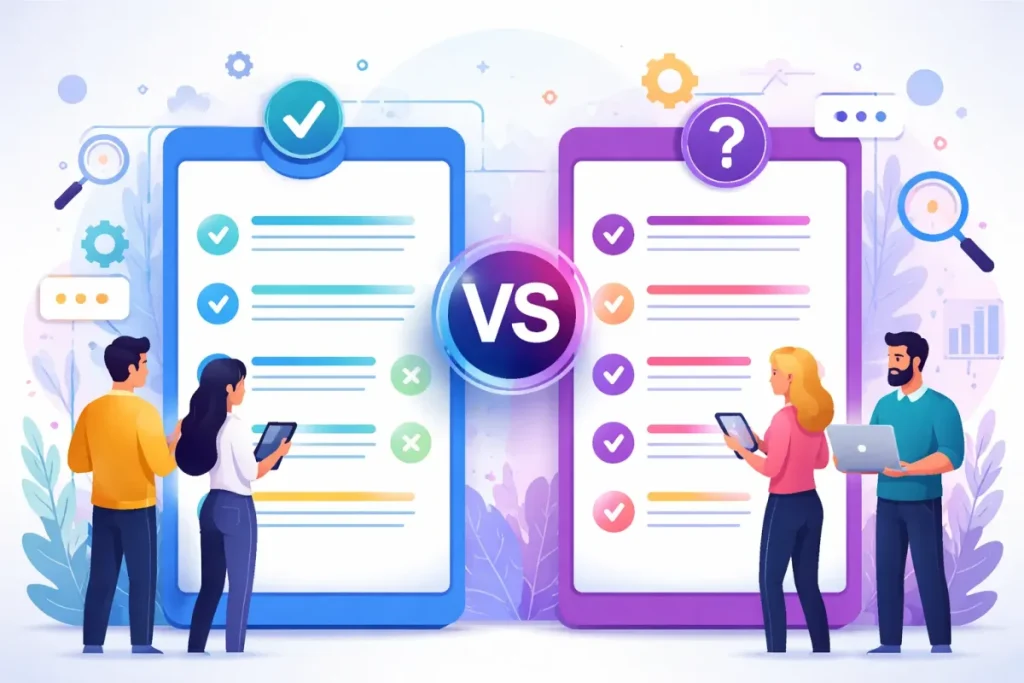
Now that we’ve looked at use cases, let’s compare both tools directly across key features, particularly how access to advanced AI differs between them. This helps highlight where the real differences are.
Performance and Speed
Grok is designed for fast, conversational responses. It prioritizes speed and flow, which makes it feel very responsive in everyday use.
Perplexity is slightly more deliberate compared to Grok 4, which emphasizes speed and engagement. It takes a bit more time to structure answers and retrieve sources, but the result is usually more reliable.
- Grok → faster responses, but it might lack the depth that perplexity for research provides.
- Perplexity → more structured output
The difference is noticeable, but not extreme. In most cases, the trade-off is between speed and quality, particularly when using different AI models.
Accuracy and Factual Reliability
Accuracy is where the gap becomes much more obvious, especially when comparing the deep research capabilities of different AI models like Perplexity and Grok.
Perplexity consistently performs better because it relies on source-backed answers. This reduces the risk of hallucinations and makes it more trustworthy.
Grok can still provide correct answers, but it is more prone to generalizations or simplified explanations.
- Perplexity → higher factual accuracy
- Grok → more variable accuracy
👉 This is one of the most important differences in the entire comparison, especially when evaluating perplexity vs grok.
Context Handling and Depth
Perplexity tends to handle complex questions better, especially when multiple steps or explanations are required, demonstrating its strength in deep reasoning.
It breaks down information in a logical way, which makes it easier to follow.
Grok is more focused on quick responses and may simplify complex topics.
- Perplexity → deeper explanations
- Grok → faster, simpler answers
Safety and Content Filtering
Both tools include safety mechanisms, but they approach them differently.
Perplexity tends to be more conservative and structured, especially when dealing with sensitive topics in academic research, reflecting the features that users expect from a leading AI. Grok can be more flexible in tone and responses.
This can be an advantage or a drawback depending on your use case, especially in the context of deep research mode.
Customization and Developer Tools
For advanced users, customization and integrations matter.
Perplexity offers more structured outputs and is generally better suited for workflows that require consistency and reliability, making it a leading AI in its category for professional research.
Grok is more focused on user experience than deep customization.
- Perplexity → better for structured workflows
- Grok → better for casual use, but pro users may find it lacking in multi-step research capabilities.
Real Output Comparison: Grok vs Perplexity
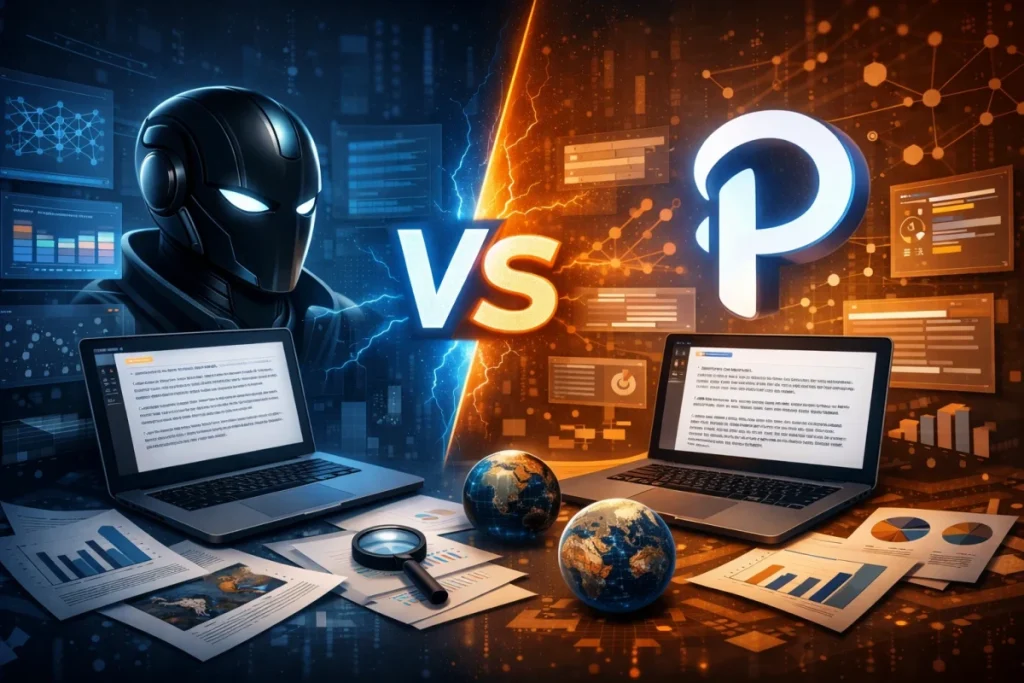
To understand the real difference, we need to look at how both tools respond to the same prompts, especially in the context of market research.
This is where the gap becomes very clear.
Prompt Example: Research Task
“Summarize recent studies about AI replacing jobs and include sources.”
Grok Output (Typical Behavior):
Grok provides a general summary of how AI impacts jobs, a topic often explored in deep research mode. The answer is readable and clear, but often lacks specific sources or detailed references.
Perplexity Output (Typical Behavior) includes image generation capabilities.
Perplexity delivers a structured summary and includes citations from articles or studies. The answer is more detailed and easier to verify.
👉 Result: Enhanced performance for coding tasks and research.
Perplexity is significantly better for research-based queries, as it can handle complex questions with deep reasoning, often outperforming others in the AI landscape.
Prompt Example: Real-Time Question
“What are the latest AI trends in 2026?”
Grok Output (Typical Behavior):
Grok responds with a dynamic overview of trends, often including very recent developments and a more conversational tone, making it a strong competitor in the realm of image generation.
Perplexity Output (Typical Behavior): Grok often provides detailed insights into professional research.
Perplexity provides a structured list of trends, but focuses more on documented information rather than live insights.
👉 Result:
Grok feels more current and reactive.
Prompt Example: Content Writing
“Write a blog introduction about remote work productivity” is a task where ChatGPT excels in creative writing.
Grok Output (Typical Behavior):
More engaging, natural, and conversational, Grok offers unique advantages over traditional models. The tone feels closer to human writing.
Perplexity Output (Typical Behavior):
Clear and structured, but less expressive and slightly more formal.
👉 Result:
Grok is better for creative writing tasks.
Benchmarks & Performance Analysis
When looking at multiple tests across different categories, a clear pattern emerges.
Perplexity consistently performs better in tasks that require accuracy, structure, and reliability. Grok, on the other hand, excels in speed, tone, and real-time awareness, outperforming many AI chatbots.
Benchmark Summary
- Perplexity performs better in:
- factual accuracy
- research tasks
- coding and technical explanations
- Structured reasoning is essential for professional research.
- Grok performs better in:
- real-time information
- conversational responses
- content creation
- Trend-based queries can be effectively handled by the best AI tools available today.
This leads to a very practical conclusion.
Perplexity is the best AI tool for serious, accuracy-driven work. Grok excels as the better tool for fast, creative, and real-time interactions.
👉 Overall Winner: Perplexity, especially for those who prioritize research capabilities and deep reasoning. Perplexity (for most use cases)
However, Grok 3 is still the better choice in specific scenarios where speed and tone matter more than precision.
Pricing Comparison: Grok vs Perplexity
Pricing is often one of the deciding factors, but it’s also where many users make the wrong decision, especially when they overlook the benefits of using chatgpt or a free tier. Looking only at cost without understanding value can lead to choosing the wrong tool, particularly in the context of academic research.
Grok and Perplexity follow different pricing models, which reflects their different purposes in the perplexity vs grok discussion.
Grok Pricing
Grok is typically bundled within the X (formerly Twitter) ecosystem. Access is often tied to premium subscriptions for pro subscribers rather than a standalone AI pricing model.
This means you are not just paying for the AI itself, but for the broader platform.
- Included in X Premium plans
- No traditional “per token” pricing model is available for access to advanced AI features.
- Designed more for end users than developers
This makes Grok simple to access, but less flexible for advanced or enterprise use cases.
Perplexity Pricing
Perplexity follows a more traditional AI tool pricing structure, with both free and paid tiers.
The free version is already quite powerful, while the Pro plan unlocks more advanced capabilities and model access.
- Free plan with strong baseline features
- Pro subscription for advanced models and usage
- More flexible for professional workflows
This structure makes Perplexity more scalable, especially for users who rely on it regularly, similar to how ChatGPT operates.
Real Cost Comparison
The key difference is not just price, but what you get for it, especially when comparing ChatGPT vs Claude, as perplexity might offer better insights for research.
- Grok offers better value for casual users already in the X ecosystem, especially when considering its conversational strengths.
- Perplexity → better value for research and professional use
👉 Important insight:
Choosing the cheaper option often leads to worse results if the tool doesn’t fit your use case.
Integrations & Ecosystem
A tool’s ecosystem determines how well it fits into your workflow. This is especially important for developers and businesses utilizing deep search techniques.
Grok and Perplexity take very different approaches here, particularly in their use of conversational AI.
Grok Ecosystem
Grok is tightly integrated into the X platform. This gives it a unique advantage for social and real-time interactions, but limits its flexibility outside that environment, contrasting with the versatility seen in other leading AI.
- Strong integration with X (Twitter)
- Optimized for in-platform use
- Limited external integrations, which can affect its performance in professional research.
This makes Grok ideal for users who already spend time in that ecosystem, allowing users to maximize their productivity.
Perplexity Ecosystem
Perplexity is more open and flexible, especially for research and productivity workflows.
It integrates better with tools that require structured information and reliable outputs.
- Web-based interface with research focus
- Better suited for productivity workflows
- Easier to combine with external tools
👉 Key takeaway: Grok excels in dynamic interactions while Perplexity is best for research.
Perplexity is more versatile, while Grok is more platform-specific.
Security, Privacy & Compliance

For casual users, this section may not matter much. But for businesses and professionals, it is critical.
Both tools handle data differently, and that can influence your decision, particularly in terms of their approach to deep reasoning.
Grok
Because Grok is connected to the X ecosystem, data handling is tied to that platform.
- Less transparency around data usage
- Designed primarily for consumer use
- Not optimized for strict compliance environments
Perplexity
Perplexity is more aligned with professional and research use cases, which requires better transparency.
- A more structured approach to data handling can enhance the effectiveness of research papers in decision-making.
- Better suited for professional environments
- More reliable for research-based workflows, particularly when using tools like perplexity for research.
👉 Important insight:
If data sensitivity matters, Perplexity is usually the safer choice.
Who Should Use Grok vs Perplexity?
At this point, the decision becomes clearer when you map it to your specific role within the context of using chatgpt and how it fits into the broader AI landscape.
Different users will benefit from different tools.
Use Grok if you are:
- a content creator
- a social media user
- looking for quick answers
- interested in trends and real-time updates
Grok is built for speed, engagement, and creativity, allowing users to harness powerful AI capabilities.
Use Perplexity if you are:
- a student or researcher
- a developer
- Working with data or reports can be enhanced by using advanced AI models like Gemini for improved research capabilities.
- Making decisions based on information from research papers can enhance the quality of your choices.
Perplexity is built for accuracy, structure, and trust, making it a preferred choice among pro subscribers.
Biggest Mistakes When Choosing Between Grok and Perplexity
This is where many pro users go wrong. The mistake is not choosing the wrong tool like ChatGPT — it’s misunderstanding what the tool is designed for.
Common mistakes:
- Choosing based on price instead of use case can limit the potential benefits of using powerful AI tools, especially when a free tier is available.
- Expecting Grok to perform like a research tool
- Expecting Perplexity to behave like a creative chatbot may overlook its strengths in providing structured information based on research papers.
- Ignoring the importance of citations and accuracy can undermine the integrity of complex research.
- Overvaluing speed over correctness can lead to issues, especially in the context of pro users relying on AI chatbots.
👉 Key takeaway:
The wrong expectations lead to the wrong decision.
When to Choose Grok vs When to Choose Perplexity
Instead of asking which tool is better, the better question is when to use each one.
Choose Grok when:
- you need fast answers
- you care about trends and current events
- You want creative or engaging responses, much like what you might expect from ChatGPT.
Choose Perplexity when:
- accuracy is critical
- you need sources and citations
- you are doing research or analysis
Migration & Implementation Guide
Switching between tools is usually simple, but using them effectively requires some adjustments.
Basic setup steps:
- define your main use case
- test both tools with real tasks
- compare output quality
- adjust prompts for better results
Optimization tips:
- use specific prompts for better answers
- validate important information
- combine tools if needed
👉 Many advanced users actually use both tools together instead of choosing only one.
Case Studies & Real-World Examples
To make this more practical, let’s dive deep into how different users benefit from each tool.
Case 1: Research Task
A student writing a paper uses Perplexity to gather sources and structure arguments, often referencing research papers for better insights in complex research.
Result:
- higher accuracy
- verifiable information
- better academic quality
Case 2: Content Creation
A marketer uses Grok to generate content ideas and drafts.
Result:
- faster ideation
- more engaging tone
- better creative flow
Case 3: Hybrid Workflow
A product manager uses both tools to leverage the power of AI for effective market research.
- Grok for brainstorming
- Perplexity for validation
Result:
- speed + accuracy combined
👉 This is often the most effective approach when utilizing the power of AI in various contexts.
Pros & Cons Summary
Grok
Pros: Grok 4 offers unique features that set it apart from its competitors.
- fast and responsive
- strong for real-time information
- engaging tone
Cons: Limited free tier options may restrict access to powerful AI features.
- less accurate
- limited citations
- Grok is not ideal for research, particularly when compared to Perplexity’s capabilities.
Perplexity
Pros:
- High accuracy is crucial when conducting academic research, especially when comparing tools like Perplexity and Grok.
- source-based answers
- Grok is strong for research and coding, helping users synthesize information effectively.
Cons:
- less creative
- more structured tone
- The tool may be slightly slower than its competitors, but it offers a free tier that provides valuable insights into the power of AI.
FAQ
What is the main difference between Grok and Perplexity?
Grok focuses on real-time, conversational responses, while Perplexity focuses on accurate, source-based answers.
Which is better for coding?
Perplexity is generally better because it provides more structured and reliable code.
Which is more accurate?
Perplexity is more accurate due to its use of sources and structured responses.
Is Grok better than Perplexity?
It depends on your use case and whether you need a deep research tool or a more general-purpose AI. Grok is better for real-time and creative tasks, while Perplexity is better for research.
Can I use both tools together?
Yes, and many advanced users do. One for ideation, the other for validation.
Final Verdict: Grok vs Perplexity
After comparing both tools across all major categories, a clear conclusion emerges.
Perplexity is the better choice for most users because it delivers more accurate, structured, and reliable information compared to other AI models like ChatGPT, where ChatGPT excels in conversational contexts. It is especially strong for research, coding tasks, and professional use, making it a preferred choice over Grok vs Perplexity.
Grok, however, is still the better option when speed, real-time insights, and creativity matter.
👉 Final recommendation:
- Choose Perplexity for accuracy and decision-making
- Choose Grok for speed, trends, and content creation
Conclusion
The comparison between Grok and Perplexity is not about which tool is universally better, but about which one fits your needs.
If you understand the difference between accuracy and real-time capability, the choice becomes straightforward.
For most serious use cases, Perplexity is the safer and more reliable option, particularly for users who need to synthesize information effectively. But for fast, creative, and dynamic interactions, Grok remains a powerful alternative.
The best approach for many users is not choosing one, but using both in the right situations.