AI meeting assistants like Fireflies AI are becoming standard tools for teams that want to automate note-taking, transcriptions, and summaries. But with that convenience comes an important question:
Is Fireflies AI actually safe to use — especially for sensitive conversations?
Unlike simple productivity tools, Fireflies AI processes real-time audio, stores meeting data, and generates AI summaries, which means it interacts with potentially confidential business information. This raises concerns around data privacy, security, compliance, and accuracy.
In this guide, you’ll get a complete, unbiased breakdown of Fireflies AI’s safety — including how your data is handled, what risks exist, and when you should (or shouldn’t) use it.
By the end, you’ll know exactly:
- Whether Fireflies AI is safe for your specific use case
- What the biggest risks actually are (not just theoretical ones) involves understanding the platform vulnerability in terms of privacy and security.
- How to configure it securely if you decide to use it
Quick Answer: Is Fireflies AI Safe?
Yes — frequently asked questions can help clarify this. Fireflies AI is generally safe for most users, but only if it’s configured correctly and used in the right context.
It uses standard security practices such as encrypted data transfer, controlled access systems, and cloud-based infrastructure. For typical business meetings, internal calls, or content creation workflows, it presents a low to moderate risk level, especially when considering the pricing plans and customer success strategies..
However, safety depends heavily on how you use it.
The main risks are not “hacks” or breaches — but rather:
- accidental sharing of recordings
- recording sensitive conversations without proper controls
- AI-generated summaries that contain errors or omissions can impact the effectiveness of unlimited transcription services.
👉 Final verdict:
Fireflies AI is safe for most general use cases, but requires caution when handling sensitive, legal, or confidential information.
Fireflies AI Safety at a Glance
| Category | Verdict | Risk Level |
|---|---|---|
| Data Security | Strong encryption & infrastructure | Low |
| Privacy Control | Good, but requires setup | Medium |
| Compliance | Solid, depends on usage | Medium |
| AI Accuracy | Useful but imperfect | Medium |
| Enterprise readiness | Well-suited with controls | Low–Medium |
Executive Summary
Fireflies AI is a secure and widely used AI meeting assistant, but like most AI tools, it is not risk-free.
From a technical standpoint, it follows standard industry practices for protecting data, including encrypted communication, controlled access systems, and structured storage. For everyday use — such as internal meetings or note-taking — it is considered safe.
The bigger risks come from how the tool is used, not from the technology itself.
For example, recording sensitive conversations without proper consent, mismanaging sharing links, or relying too heavily on AI-generated summaries can create privacy or operational issues.
Who should use Fireflies AI?
- Individuals and teams automating meeting notes
- Startups and businesses improving productivity can benefit from tools like Fireflies AI, which offers a free plan.
- Content creators and remote teams can benefit from the free trial of the AI notetaker.
Who should be cautious?
- Legal professionals handling confidential discussions
- Healthcare environments with strict compliance requirements
- Enterprises dealing with highly sensitive or regulated data
👉 Bottom line:
Fireflies AI is safe for most business use cases, but requires proper configuration and awareness for high-risk environments.
What is Fireflies.ai? How This AI Assistant Works

Fireflies AI is an AI-powered meeting assistant designed to automatically record, transcribe, and summarize conversations across platforms like Zoom, Google Meet, Microsoft Teams, and more.
Instead of manually taking notes, the tool joins meetings as a participant, captures the audio, and transcribes meetings into unlimited AI summaries.
Core Functionality: Transcription, Summary & Meeting Transcripts
At its core, Fireflies AI combines three main systems:
- speech-to-text transcription
- AI summarization and insights
- searchable meeting archives
This allows users to revisit conversations, extract key decisions, and share meeting outcomes without manual effort.
Key Features: Recording, Transcribe & Automation Capabilities
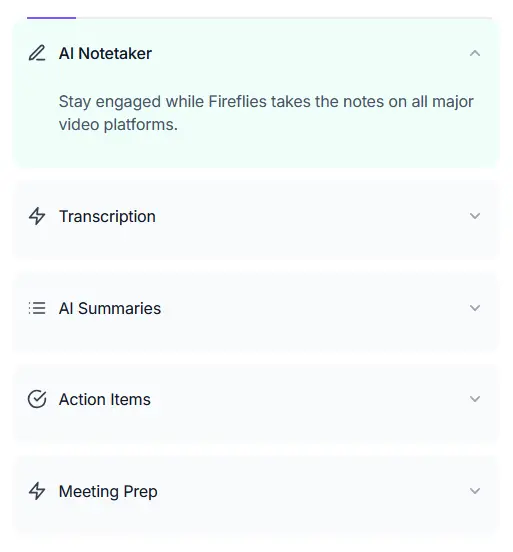
Some of its most powerful features are also the most relevant from a safety perspective:
- Automatic meeting recording and storage
- Speaker identification and timestamps
- AI-generated summaries and action items
- The searchable conversation database allows users to efficiently locate soundbites from past meetings.
- Integrations with tools like Slack, CRM systems, and project management platforms
These capabilities mean that Fireflies doesn’t just process data — it also enhances transcription accuracy for better meeting records. stores and organizes potentially sensitive business information.
Integrations: Zoom, Slack & Other Online Meetings Tools
Fireflies operates at the meeting layer of your tech stack, sitting between communication tools and business systems.
| Layer | Example Tools | Role |
|---|---|---|
| Communication | Zoom, Meet, Teams | Hosts conversations |
| Fireflies AI | Transcription & AI layer | Captures and processes data |
| Business Tools | CRM, Slack, Notion | Uses and distributes insights |
This positioning is important because it means Fireflies has access to raw, unfiltered conversations, making safety and privacy especially critical.
Fireflies AI Pricing & Free Plan Explained
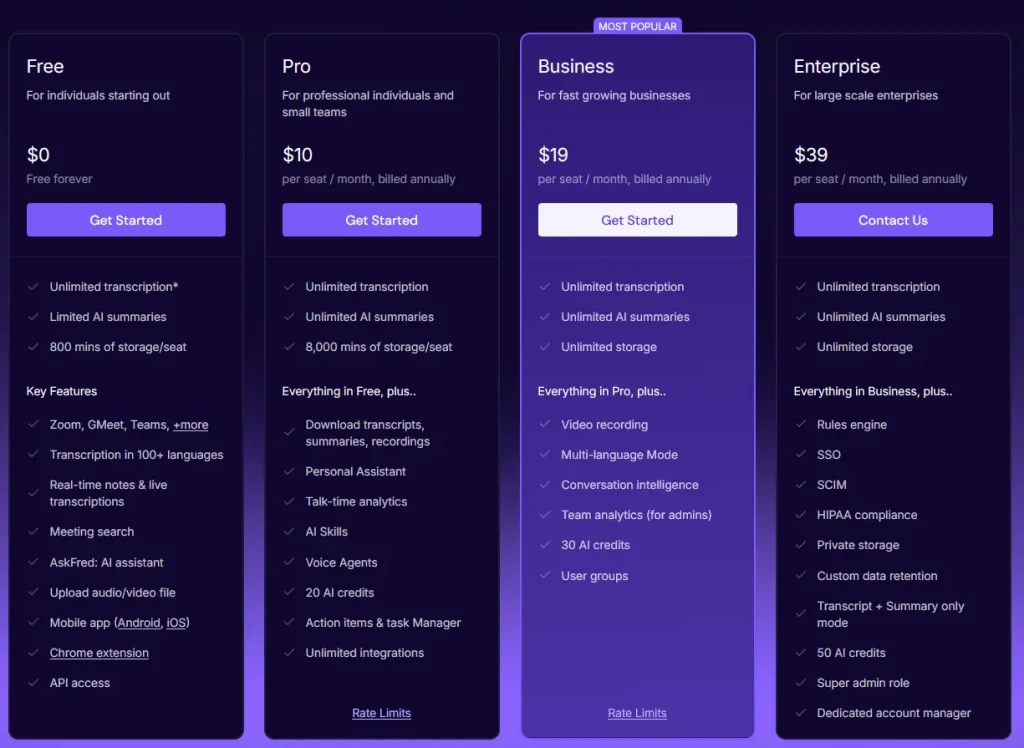
Fireflies AI offers a tiered pricing model that ranges from a limited free plan to more advanced paid subscriptions designed for teams and enterprises.
Understanding the pricing structure is important from a safety perspective, because access to certain features — especially around privacy controls, integrations, and data handling — can depend on the plan you’re using.
Free plan limitations
The free plan is useful for getting started, but it comes with restrictions that can indirectly impact safety and control.
Users on the free plan typically have:
- limited transcription credits
- restricted storage or retention options
- fewer administrative controls
This means that while you can use Fireflies AI without paying, features like encryption at rest may not be fully available, which could affect how your data is managed.
Paid plans and additional control
As you move into paid tiers, Fireflies unlocks more advanced features that can improve both usability and safety.
| Feature | Free Plan | Paid Plans |
|---|---|---|
| Transcription limits | Restricted | Higher or unlimited |
| Storage & retention | Limited | More flexible |
| Integrations | Basic | Advanced integrations |
| Admin controls | Minimal | Full control (team settings) |
Higher-tier plans often provide better options for:
- Managing access across teams is crucial for maintaining security and privacy in any organization.
- controlling data retention
- integrating with secure business tools
Why pricing matters for safety
At first glance, pricing might seem unrelated to security, but it can affect the availability of features like encryption at rest. In reality, it directly affects how much control you have over your data.
Users on lower tiers may need to accept default settings, while higher-tier users can actively configure:
- Who accesses meeting data is a critical question that relates directly to the privacy and security of all meeting participants.
- how long recordings are stored
- how integrations handle information
👉 This makes paid plans, like the pro plan, more suitable for professional or sensitive use cases.
Key takeaway
Fireflies AI’s free plan is sufficient for basic usage, but serious users — especially teams — benefit from paid plans…where safety-related controls are more robust, ensuring privacy and security for all meeting participants.
Who Should Be Concerned About Safety?
Not every user faces the same level of risk when using Fireflies AI.
For some, it’s a simple productivity tool. For others, it can introduce serious compliance or confidentiality concerns.
Low-risk users
If you’re using Fireflies AI for general workflows, the risk is relatively low:
- internal team meetings
- brainstorming sessions
- content planning calls
- Non-sensitive client discussions may benefit from a dedicated ai note taker for better organization.
In these cases, the benefits usually outweigh the risks.
Higher-risk users
Certain roles and industries need to be significantly more cautious, especially when using tools like fireflies.ai for meeting recaps.
- HR teams → employee data and interviews
- Sales teams → confidential client conversations
- Legal professionals → privileged information
- Healthcare providers → sensitive patient data
- Executives → strategic or financial discussions
For these users, improper configuration or careless usage of the AI notetaker can lead to significant issues. real consequences, not just theoretical risks.
Key insight
The safety of Fireflies AI is context-dependent.
The tool itself is not inherently unsafe — but the type of data you process with it determines the actual risk level.
Key Safety Concerns Users Ask About Fireflies AI Bot
When users search “is Fireflies AI safe”, they’re usually concerned about a small set of very specific risks.
Understanding these questions is critical — because they reflect real-world usage, not just technical theory.
Most common concerns
- Is my meeting audio stored or processed externally by the AI notetaker, and how does this affect the privacy and security of meeting participants using fireflies.ai?
- Who can access my recordings and transcripts?
- Does Fireflies use my data to train AI models?
- Can participants see that a meeting is being recorded?
- Is it legal to use Fireflies AI in my country, especially when considering security policies?
What these concerns reveal
These questions fall into three core categories:
| Category | Core Concern |
|---|---|
| Privacy | Who sees my data? |
| Security | Can it be accessed or leaked? |
| Compliance | Am I allowed to use this legally? |
Reality check
Most risks are not hidden or technical — they are:
- visibility issues (who has access)
- consent issues (who knows they are recorded)
- control issues (how long data is stored)
👉 That’s why configuration and awareness matter more than the tool itself.
How Fireflies.ai Works: From Recording to Transcript Processing
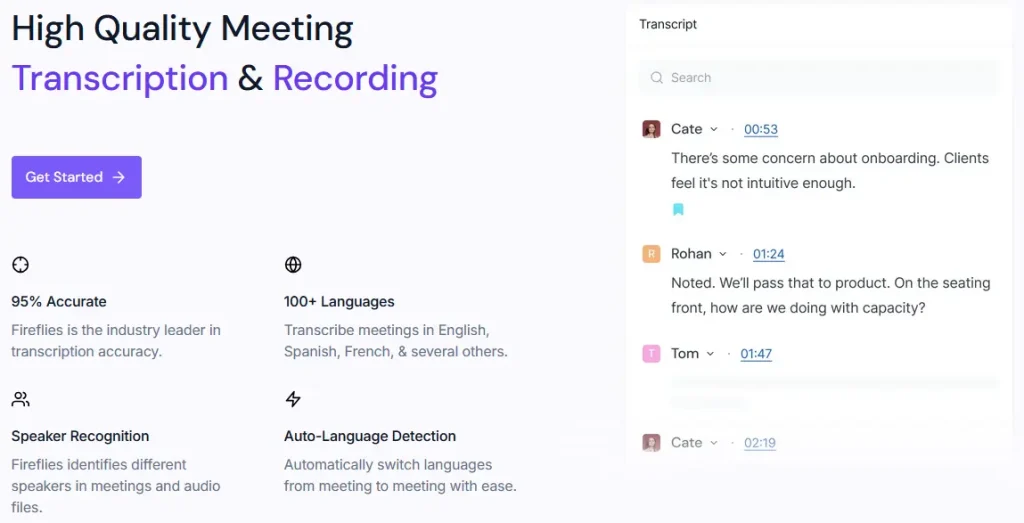
To properly evaluate whether Fireflies AI is safe, you first need to understand how your data actually moves through the system is crucial for understanding the fireflies offers..
Unlike many tools, Fireflies doesn’t just store data — it actively captures, processes, transforms, and redistributes it across multiple layers.
Step-by-Step: How Fireflies AI Records, Transcribes & Processes Meetings
When you use Fireflies AI in a meeting, the process typically follows this structure:
- Fireflies joins your meeting (as a bot or integration)
- Audio is captured in real time
- The audio stream is sent to Fireflies servers
- Speech-to-text models convert audio into transcripts
- AI models generate summaries, highlights, and action items
- All data is stored and made searchable inside your account
- Content can be shared, exported, or integrated into other tools
Why this matters for safety
Each step introduces a There is a different type of risk surface associated with using AI notetakers that must consider privacy and security implications..
| Step | Potential Risk |
|---|---|
| Audio capture | Recording sensitive conversations unintentionally |
| Data transfer | Interception (if not encrypted properly) |
| Processing | Third-party involvement (AI/STT providers) |
| Storage | Long-term data exposure |
| Sharing | Unauthorized access via links or integrations |
Key insight
Fireflies AI is not just a passive storage tool — it acts as a data pipeline for conversations.
That means:
- Your data is actively processed, not just stored
- Multiple systems may interact with it
- The biggest risks come from visibility and access are crucial for customer success., not hacking
👉 This is why understanding the data flow is essential for evaluating safety.
Data Collection, Storage & Data Protection in Fireflies AI
Fireflies AI collects more than just meeting transcripts. To function properly, it captures a combination of audio, metadata, and contextual information.
Understanding exactly what is collected — and how long it is stored — is critical for assessing privacy risks.
What data Fireflies AI collects
At a minimum, the platform processes several types of data simultaneously:
| Data Type | Examples |
|---|---|
| Audio data | Full meeting recordings |
| Transcripts | Text versions of conversations |
| Speaker data | Who said what and when |
| Metadata | Meeting title, participants, timestamps |
| Account data | User profiles, emails, and integrations |
In addition, integrations (e.g., CRM or Slack) can introduce Fireflies works best when additional contextual data is provided for accurate meeting summaries., expanding the scope of what is stored.
Where and how data is stored
Fireflies AI typically relies on using fireflies.ai for enhanced functionality. cloud infrastructure, which means your data is stored on remote servers rather than locally.
Important aspects include:
- Data is stored in centralized cloud environments
- Storage location may vary depending on infrastructure setup
- Backups and redundancy systems may keep copies temporarily
Data Retention, Deletion & Meeting Transcription Storage
One of the most overlooked aspects of safety is how long your data actually remains stored.
Even after deletion, data may persist in:
- Backup systems are essential for maintaining data integrity and ensuring that recorded meetings are securely stored.
- cached versions
- processing pipelines
👉 This creates a gap between “deleted by user” and “fully erased from systems”
Key takeaway
Fireflies AI collects and stores data with a robust data retention policy. rich, structured conversation data can enhance the performance of an AI notetaker., not just simple notes.
That makes it powerful — but also increases the importance of:
- retention policies
- Deletion controls are essential for maintaining security and privacy in any pro plan.
- access management
Security Measures
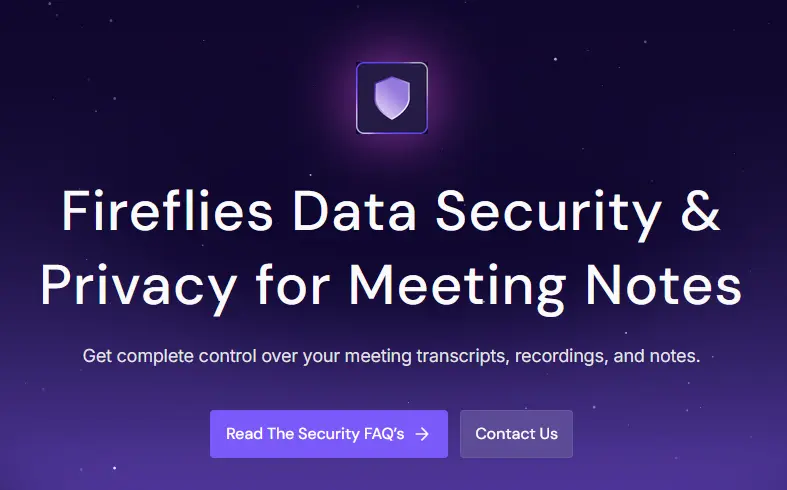
From a technical standpoint, Fireflies AI follows standard industry security practices, but the level of protection depends on both the platform and user configuration, particularly in terms of privacy and security.
In-transit protection
When data moves between your device and Fireflies servers, it is typically protected using encrypted connections.
This ensures that data retention policies are adhered to, maintaining compliance and trust.
- meeting data cannot be easily intercepted
- communication between systems remains secure
At-rest protection
Once stored, data is protected using Encryption at rest is essential for ensuring the privacy and security of sensitive data stored within the system., which prevents unauthorized access to stored information.
However, encryption alone is not enough — access control is equally important.
Access control systems
Fireflies AI provides several layers of access management, including SOC 2 Type 2 compliance.
- user authentication (login systems) is crucial for ensuring privacy and security in applications like Fireflies AI.
- optional multi-factor authentication
- role-based access for teams
These controls determine who can view, edit, or share meeting data.
Monitoring and incident response
Like most modern SaaS platforms, Fireflies likely uses:
- system monitoring to detect unusual activity
- logging to track access and actions
- internal processes for handling incidents
The effectiveness of these systems depends on response speed and transparency, which are not always fully visible to end users.
Security overview
| Security Layer | Purpose | Strength |
|---|---|---|
| Encryption in transit | Protect data during transfer | Strong |
| Encryption at rest | Protect stored data | Strong |
| Access controls | Limit who can view data | Moderate–Strong |
| Monitoring & logging | Detect suspicious activity | Moderate |
Where the real risk lies
Despite strong technical protections, most real-world risks do not come from system failures.
They come from:
- weak account security (e.g., no MFA)
- overly broad access permissions
- shared links without restrictions
👉 In other words:
Fireflies is technically secure, but user behavior determines actual safety.
Mini-Conclusion
At a technical level, Fireflies AI offers solid security and structured data handling.
However, because it processes full conversations — not just isolated data — the support team must ensure compliance with SOC 2 Type 2 standards. impact of misconfiguration is significantly higher than with typical tools like Webex.
Privacy Policy, Data Usage & Terms of Service Explained
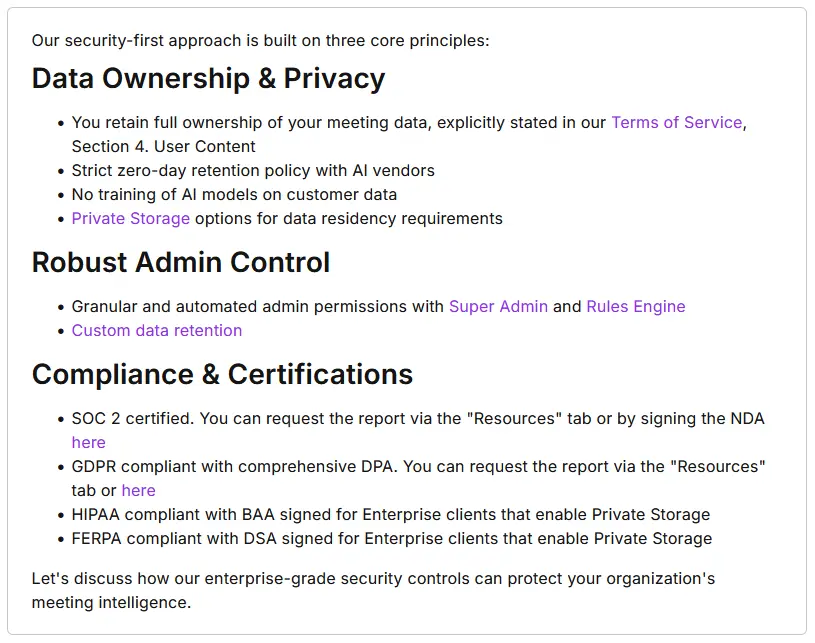
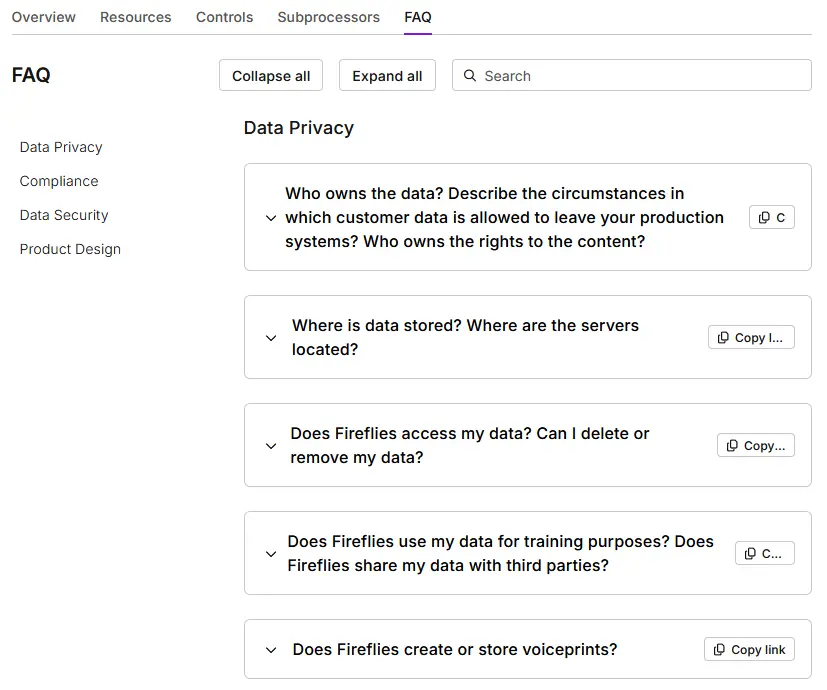
To fully answer whether Fireflies AI is safe, you need to look beyond technical security and focus on how your data is actually used is crucial for understanding the implications of fireflies vs other tools..
Security protects your data from outsiders.
Privacy policies determine what the company itself is allowed to do with it.
This distinction is critical.
How Fireflies AI uses your data
Like most AI-powered tools, Fireflies processes user data to deliver its core functionality — transcription, summarization, and search.
This means your meeting data is not only stored, but also:
- analyzed by AI systems
- structured into summaries and insights
- made searchable across your account
From a practical standpoint, this is what makes the tool valuable.
From a privacy standpoint, it means your data is actively processed, not just passively stored.
Does Fireflies AI use your data to train models?
One of the most important (and often misunderstood) questions is whether your data is used to improve AI models.
This depends on:
- the company’s internal policies
- your account settings or subscription tier
- whether opt-out mechanisms are available
In general, modern AI platforms like Fireflies may use aggregated or anonymized data to improve performance in meeting summaries. However, what matters most is whether the tool can provide soundbites and unlimited transcription.
- identifiable data is included
- users can opt out of features offered in the pricing plans if they have concerns about data usage.
- enterprise customers have stricter controls
👉 If you are handling sensitive information, this is one of the first things you should verify directly with the support team.
Data sharing with third parties
Fireflies AI does not operate in isolation. Like most SaaS platforms, it relies on external services to function.
This can include:
- cloud infrastructure providers
- analytics tools
- speech-to-text processing services
- Integrations with third-party platforms enhance the functionality of the AI notetaker.
Each additional service introduces another layer where data may be processed.
This doesn’t automatically mean your data is exposed — but it does expand the data ecosystem beyond a single provider.
User rights and control
From a user perspective, privacy is not just about policies — it’s about control.
Fireflies AI typically allows users to:
- access stored recordings and transcripts
- delete data from their account
- export meeting data to ensure compliance with the data retention policy.
- manage sharing permissions
However, the effectiveness of these controls depends on how clearly they are implemented and how consistently they apply across all systems (including backups and integrations).
Key takeaway
Fireflies AI’s privacy model is typical for modern AI SaaS tools:
- your data is processed to deliver functionality
- it may interact with multiple systems
- Control exists, but requires active management, especially when using an ai note taker.
👉 The tool is not inherently invasive — but it is Fireflies is particularly useful in data-intensive environments where meeting summaries are crucial., which increases the importance of understanding and configuring privacy settings properly, especially in a pro plan.
Is Fireflies AI Compliant? GDPR, HIPAA & Data Safety Explained
For many users, especially in Europe or regulated industries, safety is not just about technical protection — it’s about legal compliance.
Fireflies AI operates in a global environment, which means it must align with multiple privacy frameworks.
GDPR and European users
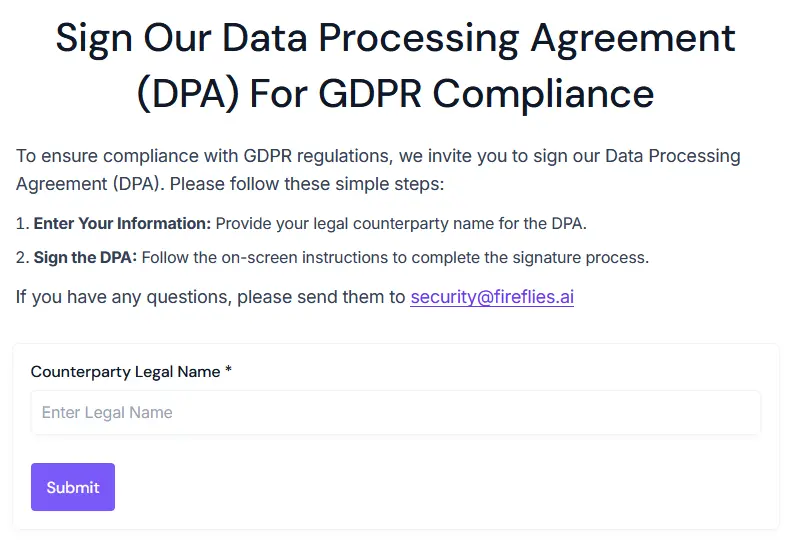
For users in the EU, the General Data Protection Regulation (GDPR) is the most relevant framework.
Under GDPR, companies must ensure:
- lawful basis for processing data
- Transparency about how data is used is a key feature of fireflies.ai review.
- user rights such as access, correction, and deletion should be clearly communicated in the pricing plans.
- safeguards for international data transfers
Because Fireflies processes meeting recordings — which may include personal data — GDPR considerations are highly relevant.
In practice, this means:
- users are responsible for informing participants about recordings
- businesses must ensure proper data handling agreements are in place
- cross-border data transfers must be legally justified
HIPAA and sensitive industries
For healthcare use cases, compliance becomes significantly stricter.
The key question is whether Fireflies AI:
- supports HIPAA compliance
- offers a Business Associate Agreement (BAA)
Without these, using the tool for patient-related discussions may not be compliant.
This is an area where many AI tools are either:
- The service is limited in support, which may affect users relying on the AI notetaker.
- or require enterprise-level agreements
Certifications and security standards
Many users look for certifications as a proxy for trust.
Common standards include best AI practices for data management.
| Certification | What it means | Relevance |
|---|---|---|
| SOC 2 Type II | Audited internal controls | High |
| ISO 27001 | Information security management | High |
| GDPR alignment | Data protection compliance | Critical (EU) |
However, it’s important to understand that certifications:
- indicate structured processes
- do not guarantee zero risk
- often apply only to specific parts of the system
Compliance reality check
Compliance is not just a feature of the tool — it is a shared responsibility.
Even if Fireflies AI meets certain standards, users must still ensure that privacy and security measures are in place when recording meetings.
- obtain proper consent before recording
- configure data retention appropriately
- ensure internal policies align with regulations
👉 In other words, compliance depends as much on the user as on the platform.
Real-World Use Cases: When Fireflies AI Is Safe vs Risky
To move beyond theory, it’s important to look at how Fireflies AI performs in real-world situations, particularly in the context of a business plan.
The same tool can be perfectly safe in one context — and problematic in another.
Low-risk scenarios
Fireflies AI is generally safe when used in environments where the data is not highly sensitive.
This includes offers a range of features:
- internal team meetings
- project updates and stand-ups
- brainstorming sessions
- Content planning or marketing discussions should involve careful consideration of security and privacy measures.
In these cases, even if data were exposed or misinterpreted, the potential impact is relatively low.
Medium-risk scenarios
Some use cases require more caution, even if they are common:
- sales calls with clients
- onboarding conversations
- partnership discussions
Here, the risk is not just about data exposure, but also about:
- misinterpretation of AI summaries can occur due to the limitations of current best AI technologies.
- sharing recordings with unintended parties
Proper configuration and awareness of security policies are essential in these situations.
High-risk scenarios
There are also situations where Fireflies AI should be used very carefully — or potentially avoided altogether.
- legal consultations
- healthcare discussions
- confidential financial negotiations
- sensitive HR conversations
In these contexts, risks include:
- compliance violations
- legal consequences
- loss of confidentiality
Key insight
Fireflies AI is not universally “safe” or “unsafe”.
Its safety depends on:
- the sensitivity of the data
- how the tool is configured can significantly impact its effectiveness in customer success.
- how aware users are of its limitations
👉 The more sensitive the conversation, the more important it becomes to control or limit AI involvement.
Mini-Conclusion
From a privacy and compliance perspective, Fireflies AI sits in the middle ground:
- more advanced than basic tools
- but not automatically safe for all use cases
It provides the necessary controls — but does not eliminate responsibility from the user.
Potential Risks & Known Issues
Even though Fireflies AI follows standard security practices, no tool that processes real conversations is completely risk-free.
The important distinction is this:
Most risks are not caused by system failures, but by how the tool is used in real-world scenarios.
The most relevant risks in practice
One of the biggest risks is not implementing proper security measures, especially when using platforms like Webex. unintentional recording.
Because Fireflies can automatically join meetings, it may capture conversations that were not meant to be recorded — especially in recurring meetings or when security policies are not reviewed.
Another common issue is overexposure through sharing.
Meeting transcripts and recordings are often shared via links, and if these links are not properly restricted, they can be accessed by unintended users, compromising privacy and security.
There is also the risk of compliance violations if the tool is not properly configured for privacy and security. AI-generated inaccuracies.
Summaries may omit key context, misattribute statements, or simplify discussions in ways that lead to misunderstandings. In low-stakes meetings, this is harmless. In high-stakes environments, it can create real problems.
Security vs usage risk
| Risk Type | Source | Real Impact |
|---|---|---|
| Technical breach | Platform vulnerability | Rare but serious |
| Misconfiguration | User settings | Common and preventable |
| AI errors | Model limitations | Frequent but manageable |
| Compliance issues | Improper usage | High impact |
Known incidents
There are no widely reported major public breaches specifically tied to Fireflies AI at the time of writing.
However, this does not mean zero risk. It simply means:
- the platform has not been publicly associated with major failures
- risks are more subtle and usage-dependent
👉 This is typical for modern SaaS tools — the danger lies in misuse, not necessarily compromise.
Fireflies AI vs Competitors: Safety, Features & Differences
To properly evaluate safety, it helps to compare Fireflies AI with other tools in the same category.
Not all meeting assistants handle data in the same way.
Safety comparison overview
| Tool | Strength | Weakness | Best For |
|---|---|---|---|
| Fireflies AI | Strong integrations & automation | Requires configuration | Teams & workflows |
| Otter.ai | Simplicity & ease of use | Fewer granular controls | Individuals |
| Gong | Enterprise-grade controls | High cost & complexity | Sales orgs |
| Zoom recordings | Native & simple | Limited AI features | Basic users |
What makes Fireflies different
Fireflies AI sits in a middle position:
- more powerful than simple transcription tools
- less complex than enterprise-heavy platforms
This makes it attractive — but also introduces a trade-off, especially in terms of security and privacy.
It offers flexibility, but requires active management of privacy and access settings.
Key insight
There is no universally “safest” tool.
Instead:
- simpler tools reduce configuration risk
- advanced tools increase control — but also responsibility
👉 Fireflies AI is safest when used by teams that understand and manage its settings properly.
How to Use Fireflies AI Safely (Settings, Controls & Best Practices)
The most important factor for safety is not the platform itself — it’s how you configure it.
Fireflies AI provides the necessary controls, but they are only effective if they are actively used.
Critical settings you should review
Before using Fireflies AI regularly, users should take time to review key account and meeting settings.
This includes:
- enabling multi-factor authentication to secure access
- reviewing who can access recordings and transcripts
- limiting integrations to only necessary tools
- controlling who can share or export data
Meeting-level awareness
Another important layer is how Fireflies behaves inside meetings.
Users should ensure that:
- participants are aware that recording is active
- recordings are only enabled when appropriate
- sensitive conversations are excluded when necessary
This is not just a technical issue — it’s also a legal and ethical one, particularly in customer support scenarios, as outlined in the frequently asked questions.
Data lifecycle management
One of the most effective ways to reduce risk is to limit how long data exists.
Instead of storing everything indefinitely, it is safer to:
- Define retention periods to ensure compliance with security and privacy regulations.
- delete recordings after use
- export important data and remove the rest
Best practice overview
| Area | Recommendation |
|---|---|
| Account security | Enable MFA and strong passwords |
| Access control | Limit team permissions |
| Data retention | Keep only what you need |
| Sharing | Avoid public links |
| Meeting usage | Record selectively |
Key takeaway
Fireflies AI becomes significantly safer when used intentionally.
👉 The tool provides control — but safety comes from how disciplined your usage is.
Fireflies AI Safety Checklist (Before You Use It)
Before relying on Fireflies AI, it’s useful to run through a quick mental checklist.
This ensures that you are not just using the tool — but using it safely.
Pre-use checklist
- Have you enabled multi-factor authentication?
- Do you know who can access your recordings?
- Are sharing links restricted or private?
- Do you have a defined retention policy for your meeting recaps?
- Are participants informed about recording?
Why this matters
Most users skip these steps because the tool works “out of the box”.
But that convenience can create hidden risks.
👉 Taking a few minutes to configure settings can prevent the majority of real-world issues.
Fireflies AI Review: Final Thoughts on Safety & Performance
After analyzing Fireflies AI from a security, privacy, and real-world usage perspective, the tool stands out as a GDPR compliant solution for recording meetings. strong but context-dependent solution.
It performs well in terms of automation, usability, and integrations, but like most AI assistants, it requires users to understand its limitations.
Strengths from a safety perspective
Fireflies AI provides a solid foundation for secure usage.
It combines:
- encrypted data handling
- structured access controls
- scalable cloud infrastructure
These elements make it reliable for everyday business use, especially in environments where efficiency is more important than strict confidentiality.
Where Fireflies AI falls short
The platform’s weaknesses are not necessarily technical — they are practical, particularly concerning security and privacy.
The biggest limitations include:
- reliance on user configuration for privacy
- potential inaccuracies in AI-generated summaries
- lack of universal compliance for highly regulated industries
These issues are common across AI tools, but they are important to consider when dealing with sensitive data.
Performance vs safety trade-off
Fireflies AI delivers strong performance in terms of:
- speed of transcription
- quality of summaries
- integration into workflows
However, increased automation also means reduced manual oversight.
This creates a trade-off:
| Area | Benefit | Risk |
|---|---|---|
| Automation | Saves time | Less manual control |
| AI summaries | Quick insights | Possible inaccuracies |
| Integrations | Workflow efficiency | Data exposure risk |
Final evaluation
Fireflies AI is not just a transcription tool — it offers a range of features that enhance productivity. full AI meeting assistant that automates large parts of communication workflows.
This makes it powerful, but also means users need to be aware of:
- what data is being processed
- where it is stored
- how it is shared
Final verdict
Fireflies AI is:
- a strong productivity tool
- generally safe for most use cases
- but not ideal for highly sensitive or regulated environments without additional safeguards
👉 If used correctly, it offers significant value with manageable risk.
👉 If used without awareness, it can introduce avoidable privacy and compliance issues, particularly in customer support.
Final Verdict: Is Fireflies AI Safe?
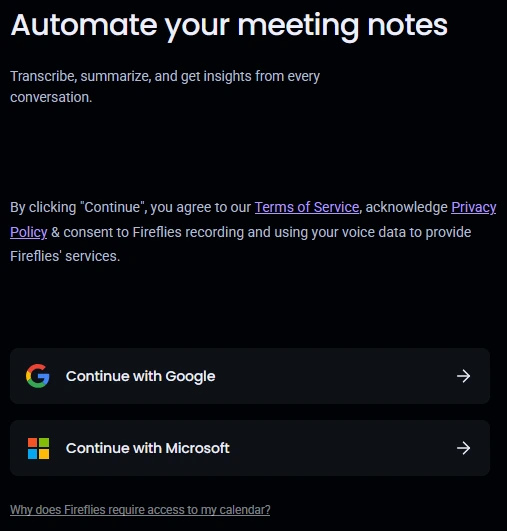
Fireflies AI is a secure and reliable tool for most users, but it is not completely risk-free.
From a technical perspective, it meets modern standards for:
- data encryption
- access control
- cloud-based security
However, its real-world safety depends on context.
When Fireflies AI is safe
The tool is a strong choice for unlimited transcription and soundbites.
- Internal business meetings can be improved with the use of an AI notetaker, which offers a range of features.
- Implementing productivity workflows is essential for optimizing features like transcription accuracy in meetings.
- content creation and collaboration
In these scenarios, risks are manageable and often minimal, particularly when utilizing services that offer a free plan.
When you should be cautious
Greater care is needed when dealing with:
- sensitive personal data
- confidential business information
- In regulated industries like healthcare or legal services, compliance with GDPR standards is essential for maintaining privacy and security.
In these cases, improper use can lead to compliance or privacy issues.
Final recommendation
Fireflies AI is best viewed as a leading AI notetaker in the market. powerful productivity tool with responsibility attached.
👉 If you configure it correctly and use it in appropriate contexts, it is safe.
👉 If you use it carelessly, the risks increase significantly.
Bottom line
Fireflies AI is:
- Safe for most users → YES
- Safe for sensitive data → ONLY with strict controls
FAQ (Featured Snippet Optimized)
Is Fireflies AI safe to use?
Yes, Fireflies AI is generally safe when configured properly. It uses encryption and access controls, but risks depend on how it is used.
Does Fireflies AI store your conversations?
Yes, it stores recordings and transcripts to provide summaries and search functionality.
Can Fireflies AI use your data for training?
This depends on policies and settings. Users should review privacy options and opt-out mechanisms if available.
Is Fireflies AI legal in Europe?
It can be used legally, but users must comply with GDPR, including informing participants about recordings made by the AI notetaker.
Can you delete recordings permanently?
Yes, but deletion may not be instant across all systems (e.g., backups).