Is Janitor AI safe in 2026, given the evolving safety concerns surrounding AI technologies? That’s one of the most common questions people ask before using Janitor AI free — and for good reason.
Janitor AI is very different from typical AI chat tools, particularly in its approach to addressing safety concerns. It focuses on character-based conversations, roleplay, and creative freedom, but users should remain aware of potential safety concerns. That makes it powerful, but it also raises serious questions about privacy and security.
Many users don’t realize how their data is handled or where their messages actually go. And that’s where the risk comes in.
In this guide, you’ll get a clear and honest answer to whether Janitor AI is safe for customization and creative use in AI applications. We’ll break down how it works, what happens to your data on platforms like Janitor AI, and what you should (and shouldn’t) do when using AI chat platforms, particularly regarding the nsfw toggle to mitigate safety concerns.
Here’s what you’ll learn:
- Whether Janitor AI is actually safe to use is a question that raises several safety concerns, particularly when comparing free vs premium features.
- What happens to your chats and personal data
- The biggest privacy risks you need to know
- How to use Janitor AI safely
By the end, you’ll know exactly when it’s safe — and when it’s not.
Quick Answer — Is Janitor AI Safe?
If you just want a clear answer, here it is:
Janitor AI is free to use and safe for casual use, but It is not safe for sensitive or private information, especially when using free access tools.
The platform works well for roleplay, creative chats, and entertainment. However, it does not offer the level of privacy or security you would expect from tools designed for confidential use, like ChatGPT.
Here are the most important things you need to know about using the platform’s features responsibly, especially when interacting with AI characters.
- Your chats can be stored and processed on customizable platforms like Janitor AI, which may impact your data privacy, particularly in light of potential age restrictions.
- Messages may pass through third-party AI services, which can compromise privacy on platforms like Janitor AI.
- There is no end-to-end encryption, making it difficult to ensure privacy when using AI chatbot platforms.
- Security features like 2FA are limited or missing in many completely free AI chat platforms.
👉 Using an api key can help secure your interactions with the bot. Simple rule: Always prioritize data privacy when using tools like Janitor AI, especially when considering differences between free vs premium services.
Use Janitor AI for fun and creative use — not for anything personal, private, or sensitive, as the safety features are not designed for such purposes.
The Truth About Janitor AI Safety (Read This First)

Most users assume that AI chat tools, including character AI and other AI alternatives, are private by default, but this may not be true when interacting with Discord. That’s not the case with Janitor AI, which offers unique features of Janitor AI that enhance user experience.
The platform is designed for flexibility and open conversations, allowing users to explore various topics without strict privacy or enterprise-level security. This doesn’t make it dangerous, but it does mean you need to use it differently, especially when interacting with a persona on AI chat platforms, considering the safety concerns involved.
The biggest misconception is thinking of Janitor AI as a private space. In reality, it should be treated more like a public or semi-public tool, especially in the context of AI applications, to mitigate safety concerns.
Here’s the key idea to understand: Janitor AI is designed to prioritize user engagement while also considering privacy.
- Janitor AI prioritizes freedom over control, allowing users who want a more open and creative AI experience to explore its features.
- Conversations are not designed to be fully private
- Multiple systems may process your data
👉 Clear takeaway:
Janitor AI is only “safe” if you assume your data is not fully private, particularly when using it for nsfw content.
What Is Janitor AI? (Quick Overview)
Janitor AI is a chatbot platform focused on character-based conversations and roleplay, allowing users to create diverse AI personas. Instead of interacting with a standard assistant, you can chat with customized personalities that respond dynamically based on your input.
This makes it popular for creative writing, storytelling, and immersive chat experiences.
However, one important detail often gets overlooked in discussions about AI vs user privacy.
Janitor AI does not generate responses entirely on its own and relies on large language models and natural language processing. Instead, it acts as a middle layer that connects your messages to external AI models, such as OpenAI or other providers.
This setup has two important implications for users of conversational AI bots.
- It allows for flexible and powerful responses
- It means your data may pass through multiple systems, heightening safety concerns regarding data privacy.
Because of this architecture, understanding how the tool works is essential for evaluating its safety.
How Janitor AI Actually Works (Important for Safety)
To understand whether Janitor AI is safe, you need to understand what happens behind the scenes when you send a message to interact with AI chatbot platforms, particularly in the context of free vs premium services.
Unlike fully self-contained AI tools, Janitor AI often works as a frontend interface, allowing users to interact with multiple AI personas. Your input is processed and then sent to external AI services, which generate the response.
In simple terms, the process looks like this:
- You send a message in Janitor AI, but be aware of the safety concerns that may arise.
- The platform forwards that message to an external AI provider
- The response is generated outside of Janitor AI
- The result is sent back and displayed to you by the language model used in the AI chatbot.
This creates a chain of data handling rather than a single secure environment.
The important implication is that your data may not stay in one place, which is a crucial consideration when evaluating free vs premium options. Instead, it can pass through multiple systems, like OpenAI, depending on how the tool is configured.
👉 Why this matters: understanding safety concerns is crucial when using AI platforms.
The more systems involved, the more potential points where data can be stored, processed, or accessed, particularly when using the Janitor AI API and its features of Janitor AI.
Does Janitor AI Store Your Chats?

Yes, Janitor AI stores conversations, and this is one of the most important factors to consider when evaluating its safety in AI interactions.
Chat storage is necessary for features like conversation history, character memory, and continuity in AI applications. Without it, the platform wouldn’t work as intended.
However, this also means your messages are not temporary by default.
Here’s what is typically stored: data that may include interactions with AI characters and customization preferences.
- Your chat messages and prompts
- Character interactions and memory are crucial aspects of conversational AI platforms.
- Account-related data (such as email and session info)
- Basic metadata (IP address, device, usage patterns) is essential for understanding how janitorllm operates.
While this type of data collection is common for online platforms, the level of transparency about how it is used can vary.
👉 Key takeaway: Free tier options often come with limitations that affect security and customization.
You should always assume that your conversations are stored and could potentially be accessed or processed.
What Happens to Your Data on Janitor AI?
To really understand if Janitor AI is safe, you need to know what happens to your data after you send a message.
Most users assume their conversations stay private between them and the AI chatbot, but this is not always the case, particularly in free vs paid scenarios. In reality, the process is more complex, with numerous safety concerns that must be addressed, especially considering the free vs paid options available.
When you interact with Janitor AI, your data can be handled in multiple stages. This includes storage, processing, and sometimes forwarding to third-party services.
Here’s what typically happens when you interact with AI:
- Your message is sent through the janitor ai api, which processes the data accordingly.
- It may be forwarded to an external AI provider
- A response is generated outside of Janitor AI’s conversational AI framework, highlighting the role of large language models.
- The conversation can be stored for history and functionality, particularly in the context of AI interactions.
This means your data is not confined to a single system. Instead, it may exist in multiple environments depending on how the platform is set up for AI chatbot usage.
👉 Key insight: The integration of an API can enhance the platform’s capabilities, especially for language models like Janitor AI and Crushon AI.
The more systems involved, the less control you have over where your data ends up when you create and interact with various AI tools, especially in the context of free vs premium services.
Main Privacy Risks of Janitor AI
Janitor AI is not inherently unsafe, but it does come with several privacy risks that you should understand before using it regularly.
These risks are not always obvious, especially for new users.
Key privacy concerns
- Data storage: It’s essential to consider how the platform’s data storage aligns with user privacy expectations. Conversations are saved and not automatically deleted
- Third-party processing with AI bots can lead to data vulnerabilities, particularly when using customizable features. Messages may be sent to external AI providers, which can affect the customization of your experience, especially when considering AI vs traditional methods.
- Limited transparency can be a significant concern when using AI alternatives like KoboldAI in the free tier. Privacy policies may not fully explain data usage, especially when using free access AI platforms like Janitor AI in 2026.
- Metadata tracking: a critical concern that varies between free vs paid options. Information like IP address and device data can be collected when you interact with AI.
These factors don’t mean your data will be misused, but they do raise safety concerns that should be acknowledged. However, they do mean your conversations on platforms like Janitor AI are not truly private, raising significant safety concerns about data privacy.
👉 Important takeaway:
If you wouldn’t post something publicly, you shouldn’t share it on Janitor AI.
Biggest Security Weaknesses (What You Need to Know)
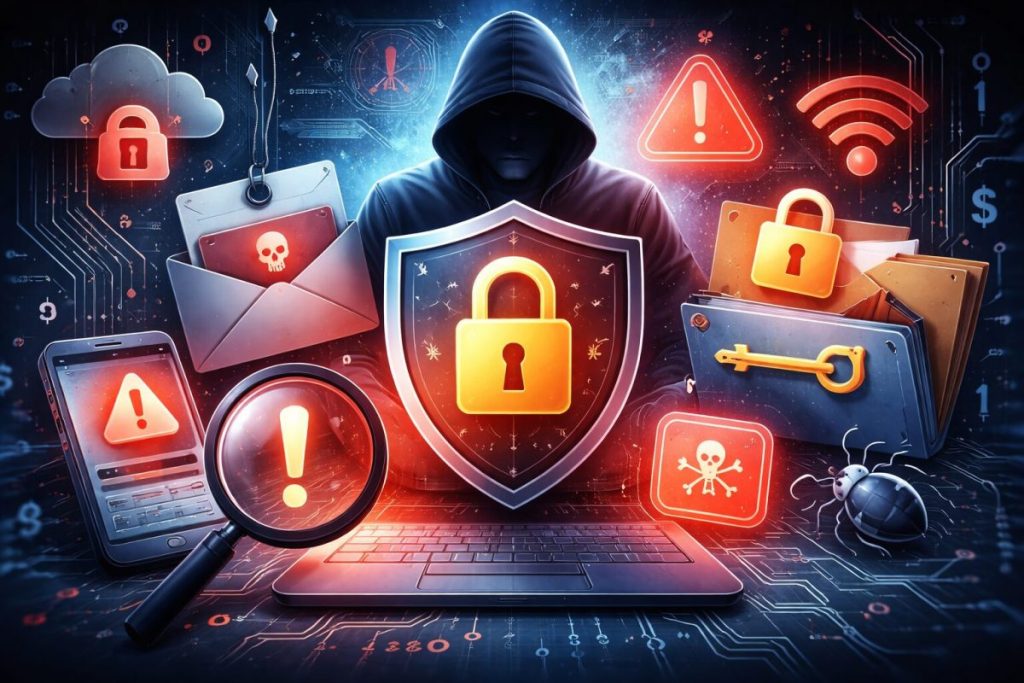
Security is different from privacy, but both are closely connected.
While Janitor AI works well as a platform, it does not prioritize advanced security features the way enterprise tools do, which is a common expectation for AI character applications.
This creates a few important weaknesses.
Main security limitations
- No end-to-end encryption for conversations
- No strong account protection features like 2FA are present in many AI applications, including Janitor AI.
- Data may pass through multiple systems when you interact with AI bots like Janitor AI.
- There is limited control over how third-party services handle data, which can lead to safety concerns.
These are not uncommon for lightweight AI tools, but they are important if you are concerned about sensitive information.
👉 What this means in practice:
Janitor AI is fine for casual use, but not designed for secure or confidential communication.
Can Developers or Staff Read Your Chats?
This is one of the most important — and most uncomfortable — questions.
The honest answer is: artificial intelligence is not infallible. possibly, yes.
Because chats are stored and processed, there is a chance that they could be accessed for moderation, debugging, or system improvements on platforms like Janitor AI, which emphasizes data privacy.
This doesn’t mean someone is actively reading your messages. But the possibility exists due to how the system is designed, particularly with janitor ai in 2026.
Situations where access might happen include:
- Troubleshooting technical issues can be more complicated with certain AI alternatives.
- improving AI responses
- Moderation or abuse detection is crucial for platforms that handle nsfw content, particularly those like OpenAI, which utilize large language models.
👉 Key takeaway:
You should always assume that your conversations with AI chatbot platforms, including AI personas, are not completely private.
Is Janitor AI Safe Compared to Other AI Chatbots?
To put things into perspective, it helps to compare Janitor AI with other AI tools, including KoboldAI, which may have different safety features.
The main difference is focus, especially between platforms that emphasize customization versus those that prioritize natural language processing.
Janitor AI prioritizes freedom and open interaction, while many other platforms prioritize safety concerns and control, especially when it comes to handling nsfw material.
Here’s a simplified comparison of safety concerns between Janitor AI and other platforms:
| Feature | Janitor AI | Typical AI Chatbots |
|---|---|---|
| Privacy focus | Low | Medium to High |
| Data handling | Distributed | More centralized |
| Security features | Basic | More advanced features are often found in paid versions compared to the free vs basic offerings. |
| Content restrictions | Very low, especially if users do not prioritize data privacy while using Janitor AI. | Moderate to high safety concerns are present when using platforms like Janitor AI. |
This doesn’t make Janitor AI worse — it just makes it different.
👉 Key insight:
You are trading privacy and security for flexibility and freedom.
Is Janitor AI Safe for Different Use Cases?
The safety of Janitor AI depends heavily on how you use it, especially with the available safety features and the nsfw toggle.
Not all use cases carry the same level of risk.
Generally safe use cases
- casual conversations
- creative writing
- roleplay scenarios
- Brainstorming ideas for improving privacy in AI interactions is essential, especially for users who want to ensure their data is secure.
Risky use cases
- sharing personal information
- Discussing financial or sensitive data is risky when you create and interact with AI characters.
- Using it for business or confidential work is not advisable due to the lack of robust safety features.
- Storing private thoughts or records can be risky when using character AI without proper security measures.
👉 Simple rule:
The more sensitive the information, the less suitable Janitor AI becomes, particularly in contexts involving nsfw discussions and large language models, as Janitor AI provides a safe for work environment.
How to Use Janitor AI Safely
Even though Janitor AI has limitations, you can still use it safely if you follow a few basic rules to prevent safety concerns.
The key is to treat it as a public or semi-public tool.
Practical safety tips
- Avoid sharing personal or financial information
- Use a separate email account for sign-up
- Choose a strong and unique password to protect your account on customizable AI chatbot platforms.
- Assume your chats are stored and accessible, especially in the context of free vs paid services.
- Avoid linking personal accounts
These small steps can significantly reduce your risk.
👉 Best mindset:
Use Janitor AI like a creative tool — not a private space.
Common Mistakes Users Make
Many safety issues don’t come from the platform itself, but from how users interact with it, especially in Discord communities that use Janitor AI.
Understanding these mistakes can help you avoid safety concerns before they happen, ensuring a safer experience.
Common mistakes to avoid
- Treating the platform like a private journal can be risky, especially if you are sharing sensitive information with an AI character, as Janitor AI may not guarantee complete confidentiality.
- Sharing real identity or sensitive details on platforms like Janitor AI may compromise your data privacy and lead to serious safety concerns.
- Assuming chats are automatically deleted, it still raises questions about data privacy in the context of Janitor AI.
- Trusting the platform without understanding how it works can lead to vulnerabilities when using AI chatbot platforms like Janitor AI.
👉 Key takeaway:
Most risks can be avoided by using the tool more carefully.
Alternatives to Janitor AI (Safer Options)
If privacy and security are important to you, it may be worth considering alternatives to Janitor AI.
Some platforms are designed with stricter data handling policies, better security features, or more transparency. While they may not offer the same level of freedom, AI applications often provide a safer overall environment for users interacting with AI chatbot platforms, addressing safety concerns effectively.
Here are a few types of alternatives you can look into, including completely free options like Janitor AI.
- Privacy-focused AI tools, such as Janitor AI’s, are becoming increasingly important in the realm of artificial intelligence to ensure safer character creation. — designed with stronger data protection and clearer policies
- Enterprise AI platforms — built for secure workflows and compliance
- Open-source solutions — allow you to control where your data is processed
Each option comes with trade-offs, especially regarding privacy and security in AI interactions. Tools that offer better security usually have stricter content rules or less flexibility, especially in free to use scenarios.
👉 Key insight:
The safer the platform, the more controlled the experience tends to be.
Pros and Cons of Janitor AI (Safety Perspective)
To make things easier, here’s a clear breakdown of where Janitor AI performs well — and where it falls short.
Pros
Janitor AI offers a unique experience that many users enjoy, especially for creative use in comparison to other AI bots, but this can differ significantly in quality between free vs paid versions.
- High flexibility and freedom in conversations
- Strong for roleplay and storytelling
- Easy to use and accessible
- Fast and responsive
Cons
At the same time, its safety limitations are important to understand.
- Limited privacy protections
- No strong security features like 2FA or safety features are present in many AI chat platforms, including Janitor AI, raising significant safety concerns.
- Data may pass through multiple systems
- Not suitable for sensitive or confidential use, especially when using AI chatbot platforms like Janitor AI, which may lack necessary safety features.
👉 Simple summary: Janitor AI provides a platform that balances creativity with safety concerns related to data privacy.
Great for creative use, but not built for privacy.
Frequently Asked Questions
Is Janitor AI safe to use in 2026?
Yes, but only for non-sensitive use. It is not designed for private or confidential information, which is a critical aspect of Janitor AI features.
Does Janitor AI store conversations?
Yes, Janitor AI provides a safe for work environment. Chats are typically stored to support features like history and character memory.
Can someone read my messages?
Possibly, especially when using customizable AI chat platforms. Depending on how the system is set up, conversations may be accessible for moderation or technical purposes, particularly in free vs paid accounts.
Is Janitor AI anonymous?
Not fully aware of the safety concerns. While you can limit personal information, metadata and account details can still be collected when you interact with AI characters.
Is Janitor AI safe for private conversations?
No. You should not treat it as a private or secure communication tool, especially on platforms like Janitor AI.
Is Janitor AI safe for kids?
Caution is recommended. The platform allows open conversations, which may not be suitable for younger users without supervision.
Final Verdict — Is Janitor AI Safe in 2026?
After looking at all aspects — privacy, security, and real-world usage of AI interactions like Crushon AI — the answer becomes clear regarding the limitations of AI vs user expectations and the associated safety concerns.
Janitor AI is safe only within limits.
It is a good tool for creative use, roleplay, and casual conversations. However, it is not built with strong privacy or security protections like those found in Janitor AI’s framework, which is designed for users who want enhanced data privacy.
👉 Final recommendation: Ensure you consider the safety concerns associated with using AI platforms like Janitor AI, especially when weighing free vs paid features.
- Use Janitor AI for entertainment and creative tasks, as it allows for extensive character creation and interaction.
- Avoid sharing personal, financial, or sensitive information
- Do not rely on it for secure communication, especially if you are discussing sensitive topics with an ai character.
If you follow these guidelines, the platform can be used safely. If not, the risks increase significantly.
Conclusion
Janitor AI is a powerful and flexible tool, but it requires a different mindset compared to traditional AI platforms like ChatGPT, especially for users who want to explore its unique features of Janitor AI.
It offers freedom and creativity, but that comes at the cost of privacy and security, especially on platforms like Janitor AI, which may not be ideal for users who want robust protections, particularly in the free vs paid tiers.
The most important thing is understanding how the system works, especially when engaging with conversational AI platforms like Janitor AI, and adjusting your behavior accordingly.
If you treat it as a public tool rather than a private space, you can enjoy its benefits without exposing yourself to unnecessary risks.
In the end, the question is not just “Is Janitor AI safe?” — but “Are you using it safely to avoid potential safety concerns?”