

AI tools are rapidly transforming creative industries, and Meshy AI is at the forefront of this shift with its ability to generate 3D models from text or images. This opens up entirely new possibilities for game development, product design, and digital content creation.
However, with this power comes an important question: Is Meshy AI safe to use—both technically and legally?
Unlike traditional AI writing tools, Meshy AI operates in a more complex space involving 3D assets, visual inputs, and potentially proprietary designs. This introduces unique concerns around data privacy, intellectual property, and output ownership that many users overlook.
In this guide, you’ll get a complete, evidence-based breakdown of Meshy AI’s safety profile. We’ll analyze how it handles your data, what risks exist when generating or uploading assets, and how it compares to similar tools. Whether you’re a solo creator or part of a business, this guide will help you decide if Meshy AI is safe for your specific use case—and how to use it responsibly.
Short Answer: Is Meshy AI Safe?
Meshy AI is generally safe to use for most users, including designers, developers, and businesses. However, its safety depends heavily on how it is used. The main risks are related to copyright and intellectual property (especially when uploading reference images), as well as standard AI concerns like data handling and output reliability. When used responsibly, Meshy AI is considered low to medium risk.
Quick Verdict
| Category | Rating |
|---|---|
| Overall Safety | ⭐⭐⭐⭐☆ (4.2/5) |
| Privacy | ⭐⭐⭐⭐☆ |
| Security | ⭐⭐⭐⭐☆ |
| IP / Copyright Risk | ⭐⭐⭐☆☆ |
| Best For | Designers, Game Developers, 3D Creators |
| Risk Level | Medium (depends on usage) |
Meshy AI stands out as a powerful and innovative tool for generating 3D assets, but like many AI platforms, it introduces specific risks that users should understand before integrating it into workflows—especially in commercial environments.
Executive Summary
Meshy AI is generally considered a safe and reliable AI tool, particularly for creative professionals working with 3D assets. It provides strong functionality for generating meshes, textures, and models from text prompts or images, making it highly valuable in workflows such as game development, prototyping, and digital design.
From a security and infrastructure perspective, Meshy AI follows standard modern SaaS practices, including cloud-based processing and API-driven integrations. There are no widely reported major security breaches associated with the platform at the time of writing.
However, the most significant risks are not purely technical—they are legal and operational.
One of the primary concerns is intellectual property (IP). Users may unknowingly upload copyrighted reference images or generate assets that resemble protected designs. This can create legal exposure, especially in commercial projects. Additionally, as with many AI platforms, users must be cautious about sharing sensitive or proprietary data through prompts or uploads.
Another key consideration is data handling transparency. While Meshy AI provides general information about data usage, users should verify whether their inputs are stored, reused for training, or shared with third parties—especially in enterprise contexts.
Overall, Meshy AI can be classified as a low-to-medium risk tool:
- Low risk for personal and experimental use
- Medium risk for commercial use without proper safeguards
- Higher risk if used with copyrighted or sensitive data
The safest approach is to combine Meshy AI with clear internal guidelines, proper asset validation, and a strong understanding of licensing and ownership rules.
What Is Meshy AI?

Meshy AI is an advanced generative AI platform designed to create 3D assets from text prompts or 2D images. It is primarily used by game developers, 3D artists, designers, and creative teams who need to rapidly produce models, textures, and visual assets without manual modeling from scratch.
At its core, Meshy AI bridges the gap between traditional 3D design workflows and modern AI-driven content generation, significantly reducing production time and technical complexity.
Core Features and Capabilities

Meshy AI offers a range of features tailored to 3D content creation:
- Text-to-3D generation, allowing users to describe objects and generate models automatically
- Image-to-3D conversion, transforming reference images into usable 3D assets
- Automated texturing and material generation
- Export options compatible with common 3D formats used in engines like Unity or Unreal
These capabilities make it particularly attractive for rapid prototyping, indie game development, and scalable asset production.
What Makes Meshy AI Unique?
Unlike many AI tools that focus on text, images, or video, Meshy AI operates in the 3D generation space, which introduces a completely different set of challenges and risks.
Key differentiators include:
- Focus on mesh generation and topology, not just visuals
- Integration into real-time rendering pipelines
- Ability to create production-ready assets, not just concepts
This uniqueness is also what makes safety analysis more complex. Generating a 3D object is not just about appearance—it involves structure, usability, and potential reuse in commercial environments.
Deployment and Access
Meshy AI is typically accessed via:
- A web-based interface for direct generation
- APIs for developers integrating it into applications or pipelines
This flexibility allows both individuals and organizations to adopt Meshy AI, but it also introduces different levels of responsibility when it comes to security, data handling, and compliance.
Who Should Use Meshy AI?
Meshy AI is best suited for:
- Game developers needing scalable asset creation
- 3D designers and artists seeking faster workflows
- Startups and studios building prototypes
- Developers integrating AI-generated assets into applications
However, the more critical or commercial the use case, the more important it becomes to understand the safety implications—especially around ownership and data usage.
How Meshy AI Works (Technical Overview)
Understanding how Meshy AI works is essential to properly assess its safety. Unlike text-based AI tools, Meshy operates in a multi-step pipeline that transforms inputs into usable 3D assets. Each stage introduces different types of risks—from data exposure to output reliability.
Architecture and Core Workflow
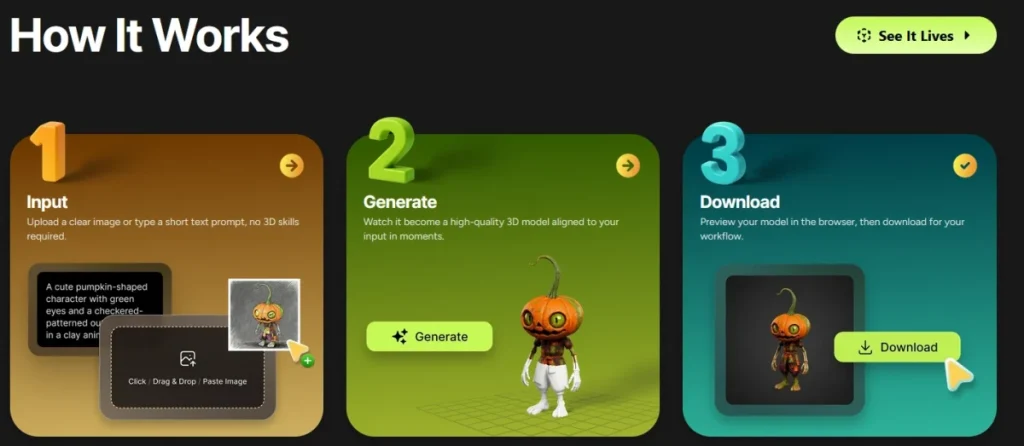
At a high level, Meshy AI follows a structured generation pipeline:
- Input stage (text prompt or image upload)
- AI model processing (geometry + structure generation)
- Mesh creation (3D object structure)
- Texture and material generation
- Output rendering and export
This pipeline is typically executed in a cloud-based environment, meaning user inputs are processed on remote servers rather than locally.
How Meshy Generates 3D Assets
Meshy AI uses a combination of generative AI models and 3D reconstruction techniques. While exact implementation details are proprietary, the general process includes:
- Interpreting prompts or images using multimodal AI models
- Generating a base mesh structure (vertices, edges, faces)
- Applying textures and materials automatically
- Optimizing the model for export and real-time usage
This is fundamentally different from image generation tools. The output is not just visual—it is functional and can be reused in production environments like game engines.
Data Flow: Where Your Input Goes
From a safety perspective, one of the most important aspects is how your data moves through the system.
Typical data lifecycle:
- Input submission (prompt or image)
- Temporary processing on cloud infrastructure
- Possible short-term storage (for rendering, caching, or session continuity)
- Output delivery (download/export)
Key questions users should consider:
- Is input data stored beyond the session?
- Is it reused for model training?
- Is it accessible to internal teams or third parties?
These factors directly impact privacy and compliance, especially for business users.
Integration Points and APIs
Meshy AI also provides APIs for developers, allowing deeper integration into workflows such as:
- Automated asset pipelines
- Game development tools
- Design platforms
While powerful, APIs introduce additional security considerations:
- API key exposure
- Unauthorized usage or abuse
- Lack of rate limiting or monitoring
For developers, securing these integrations is just as important as evaluating the AI model itself.
Telemetry and Logging
Like most SaaS platforms, Meshy AI likely uses logging and telemetry to improve performance and reliability. This can include:
- Usage data
- Error logs
- Performance metrics
While generally harmless, this data may still contain indirect information about user behavior or inputs, which is relevant in privacy-sensitive environments.
Overall, Meshy AI’s technical architecture is modern and efficient—but like any cloud-based AI system, it requires users to understand how their data is processed and where potential exposure points exist.
Safety Dimensions to Evaluate

To properly determine whether Meshy AI is safe, it’s not enough to look at a single factor like security or privacy. Instead, safety must be evaluated across multiple dimensions that together define the overall risk profile.
Privacy Risks
Privacy concerns arise when user inputs—such as prompts or uploaded images—contain sensitive or proprietary information.
Potential issues include:
- Accidental upload of confidential assets
- Storage of prompts or files on external servers
- Lack of clarity around data retention policies
For individual users, this risk is usually low. For businesses handling client data or internal IP, it becomes significantly more important.
Security Risks
From a technical standpoint, Meshy AI follows a standard SaaS model, but that doesn’t eliminate risk.
Key areas to evaluate:
- API security (especially for developers)
- Account protection (passwords, authentication)
- Potential for abuse through automated usage
Security risks are typically manageable, but misconfiguration—especially in API usage—can lead to serious exposure.
Output Safety and Reliability
AI-generated outputs are not always accurate or safe to use without validation.
With Meshy AI, this includes:
- Incorrect or unusable 3D geometry
- Broken topology or non-optimized meshes
- Outputs that resemble existing copyrighted assets
This is particularly important in production workflows, where flawed assets can create downstream issues.
Bias and Fairness
While bias is more commonly discussed in text and image AI, it still applies to 3D generation.
Examples include:
- Repetitive styles due to training data limitations
- Lack of diversity in generated objects or designs
- Over-representation of certain visual patterns
Although less critical than in other AI domains, bias can still affect creative outputs and originality.
Operational Reliability
Reliability is another key safety dimension, especially for teams integrating Meshy AI into production pipelines.
Considerations include:
- Uptime and service stability
- Consistency of outputs
- Availability of fail-safes or fallback options
Unreliable outputs or downtime can create indirect risks, particularly in time-sensitive projects.
Trustworthiness and Transparency
One of the most important—but often overlooked—factors is how transparent the platform is about its processes.
Users should evaluate:
- Clarity of documentation
- Availability of terms regarding data usage
- Transparency around model limitations
A lack of transparency doesn’t necessarily mean the tool is unsafe—but it increases uncertainty and risk.
3D-Specific Risks (Critical for Meshy AI)
This is where Meshy AI differs significantly from most other AI tools.
Unique risks include:
- Generating assets that unintentionally replicate copyrighted designs
- Using reference images that contain protected IP (logos, characters, branded objects)
- Reusing generated assets commercially without verifying ownership rights
Because Meshy AI outputs are often used in real products (games, apps, 3D marketplaces), these risks are more than theoretical—they can have direct legal and financial consequences.
Understanding these dimensions is essential before moving into deeper topics like privacy, security, and legal compliance, which we’ll explore next.
Privacy and Data Handling

Privacy is one of the most important factors when evaluating whether Meshy AI is safe—especially for users working with proprietary assets, client data, or commercially sensitive projects.
While Meshy AI follows typical SaaS patterns, the real question is not just whether data is collected, but how it is used, stored, and potentially reused.
What Data Does Meshy AI Collect?
Like most AI platforms, Meshy AI processes user-provided inputs to generate outputs. This typically includes:
- Text prompts describing 3D objects
- Uploaded images used for image-to-3D generation
- Generated assets and intermediate processing data
- Usage data such as session activity and interactions
In addition, platform-level data may be collected, such as device information, IP address, and performance logs.
For most users, this is standard—but the risk increases when sensitive or proprietary data is involved.
How Is Your Data Stored?
Meshy AI operates in a cloud-based environment, which means:
- Data is processed on remote servers
- Temporary storage may be used for rendering and caching
- Outputs may remain accessible for download or reuse within your account
Important considerations:
- Is data encrypted at rest and in transit?
- How long is it retained?
- Is it automatically deleted or stored indefinitely?
If these details are not clearly documented, users should assume at least short-term storage exists.
Does Meshy AI Use Your Data for Training?
This is one of the most critical privacy questions—and one that directly impacts both individuals and businesses.
In general, AI platforms may:
- Use anonymized data to improve models
- Store inputs for quality assurance or debugging
- Aggregate usage patterns for optimization
However, unless explicitly stated otherwise, users should not assume their data is excluded from training pipelines.
For safety-conscious users, best practice is:
- Avoid uploading sensitive or proprietary content
- Use synthetic or non-identifiable reference data
- Review terms of service and privacy policies carefully
For enterprise use, this question should always be clarified contractually.
Data Sharing with Third Parties
Another key factor is whether Meshy AI shares data with external providers.
Possible scenarios include:
- Cloud infrastructure providers (hosting, storage)
- Analytics tools (usage tracking, performance monitoring)
- Subprocessors involved in AI model deployment
While this is standard practice, it introduces additional layers of risk, particularly under regulations like GDPR.
Users should verify:
- Whether subprocessors are listed transparently
- Where data is geographically stored
- Whether data transfers occur outside regulated regions
PII Exposure and Sensitive Data Risks
Meshy AI is not designed to process personal data, but that doesn’t eliminate the risk of accidental exposure.
Potential issues include:
- Uploading images containing identifiable individuals
- Including personal or confidential information in prompts
- Using proprietary product designs or internal assets
Even if the platform is secure, user behavior can introduce privacy risks.
Privacy-Preserving Practices
While Meshy AI may not explicitly implement advanced privacy technologies like differential privacy or federated learning, users can still apply best practices:
- Minimize data input to only what is necessary
- Avoid real-world sensitive references
- Regularly delete unused assets or sessions (if supported)
- Use separate environments for testing vs production
Audit Questions for Businesses
For organizations evaluating Meshy AI, the following questions are essential:
- Is customer data stored or reused for training?
- What are the data retention and deletion policies?
- Where is data hosted, and under which jurisdiction?
- Are there enterprise-grade privacy controls available?
Security Risks and Protections
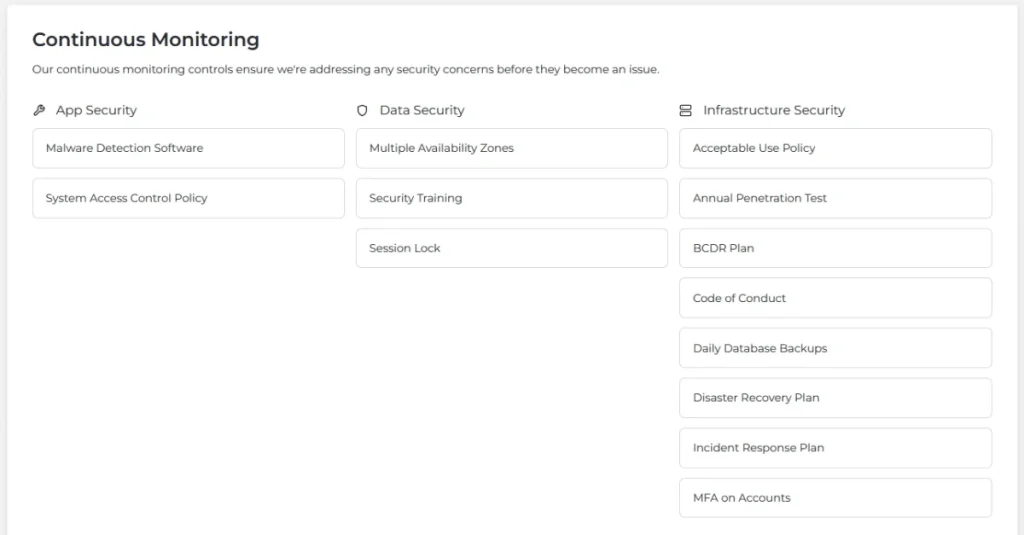
Beyond privacy, security is a core component of whether Meshy AI is safe—particularly for developers and businesses integrating it into production environments.
While there are no widely reported major breaches associated with Meshy AI, that does not mean it is risk-free. Like any cloud-based platform, its security depends both on provider safeguards and user practices.
Common Attack Vectors
Meshy AI, like other AI platforms, may be exposed to several types of threats:
- API abuse (unauthorized or excessive usage)
- Credential compromise (weak passwords, leaked API keys)
- Data exfiltration via manipulated inputs
- Model-related attacks (e.g., extracting patterns or outputs at scale)
These risks are not unique to Meshy AI but are relevant in any AI-driven system.
Prompt Injection and Malicious Inputs
While prompt injection is more commonly associated with language models, similar concepts can apply here.
Examples include:
- Uploading crafted images designed to manipulate outputs
- Using prompts to generate restricted or harmful content
- Attempting to reverse-engineer model behavior
Although the impact may be lower than in LLMs, it still affects reliability and output safety.
Model Theft and Intellectual Property Risks
One overlooked security concern is model extraction or output replication.
Potential risks:
- Recreating proprietary assets through repeated queries
- Generating similar models based on protected designs
- Reverse-engineering workflows
For creators and businesses, this can lead to loss of competitive advantage or legal exposure.
Infrastructure Security
On the provider side, Meshy AI likely relies on modern cloud infrastructure, which typically includes:
- Network isolation and segmentation
- Firewalls and web application protection
- Identity and access management (IAM)
- Encryption for data in transit
However, users do not control this layer directly, so trust in the provider is essential.
Runtime Protections
Effective platforms implement safeguards during operation, such as:
- Rate limiting to prevent abuse
- Monitoring for unusual activity
- Detection of adversarial or malformed inputs
The presence and effectiveness of these controls are key indicators of platform maturity.
API Security for Developers
For developers, API usage is one of the biggest security risks—and also one of the easiest to mismanage.
Best practices include:
- Never exposing API keys in frontend code
- Using environment variables and secure storage
- Implementing request validation and throttling
- Monitoring usage for anomalies
A single leaked API key can result in unauthorized usage, cost spikes, or data exposure.
Incident Response and Transparency
A critical—but often overlooked—aspect of security is how a platform handles incidents.
Users should consider:
- Are security incidents publicly disclosed?
- Is there a clear breach notification process?
- Are logs available for forensic analysis?
Even a secure system can experience incidents—the difference lies in how they are handled.
Overall Security Assessment
From a practical standpoint, Meshy AI can be considered:
- Secure by default for individual users
- Moderately secure for developers (with proper API handling)
- Dependent on internal controls for enterprise use
Most security risks are manageable, but they require awareness and proper configuration—especially in professional environments.
Bias, Fairness and Ethical Concerns
Compared to text-based AI systems, bias and fairness play a slightly different role in tools like Meshy AI. Instead of language or decision-making bias, the focus here is on creative bias, dataset limitations, and ethical usage of generated assets.
Sources of Bias in Meshy AI
Bias in Meshy AI primarily stems from the data used to train its models. This can include:
- Overrepresentation of certain object types or styles
- Limited diversity in shapes, textures, or design patterns
- Repetition of common visual motifs seen in training data
As a result, generated 3D models may:
- Look stylistically similar across different prompts
- Reflect dominant design trends rather than unique outputs
- Lack diversity in certain categories (e.g., cultural artifacts, niche objects)
Creative Bias in 3D Generation
Unlike text AI, where bias can directly impact meaning or fairness, Meshy AI’s bias is more aesthetic and structural.
Examples include:
- Defaulting to “generic” interpretations of objects
- Producing similar geometry for different prompts
- Favoring certain proportions or textures
This can limit originality, especially for creators seeking highly distinctive assets.
Ethical Concerns in Usage
The ethical dimension of Meshy AI is closely tied to how it is used rather than the model itself.
Key concerns include:
- Generating assets that resemble copyrighted characters or brands
- Using AI-generated models without attribution or transparency
- Replacing human-created assets without ethical consideration
While these are not direct “safety” issues in a technical sense, they can have reputational and professional implications.
Mitigation Strategies
To reduce bias and ethical risks, users should:
- Validate outputs for originality before commercial use
- Combine AI-generated assets with manual refinement
- Avoid prompts that directly reference protected or branded content
Transparency and Documentation
A trustworthy AI platform should provide:
- Clear documentation of model capabilities and limitations
- Guidance on responsible usage
- Terms outlining acceptable use and restrictions
While Meshy AI provides general guidance, users should not rely solely on the platform—critical evaluation of outputs remains essential.
Regulatory and Legal Context
Legal considerations are one of the most critical aspects of determining whether Meshy AI is safe—especially for commercial use. While the platform itself may be technically secure, legal misuse can create significant risk.
Applicable Laws and Frameworks
Depending on how Meshy AI is used, several regulatory frameworks may apply:
- GDPR (EU) for personal data protection
- CCPA/CPRA (US) for consumer privacy rights
- Sector-specific regulations (if used in healthcare, finance, etc.)
For most creative use cases, the primary legal concerns are not data privacy laws—but intellectual property (IP) and content ownership.
Who Owns Meshy AI Generated Assets?
One of the most important questions users ask is:
Do you actually own what Meshy AI generates?
The answer depends on the platform’s terms of service, but in general:
- Users typically receive rights to use generated outputs
- Ownership may not be exclusive or fully protected
- Rights can be limited if outputs are derived from protected inputs
This creates a gray area, especially for commercial projects.
Can You Use Meshy AI for Commercial Projects?
In most cases, Meshy AI allows commercial use—but with conditions.
Users should verify:
- Whether generated assets can be sold or redistributed
- If attribution is required
- Whether there are restrictions on specific types of content
Even if commercial use is permitted, legal responsibility remains with the user.
Copyright Risks Explained
This is the biggest legal risk associated with Meshy AI.
Potential issues include:
- Uploading copyrighted images as references
- Generating assets that closely resemble existing IP
- Using outputs in commercial products without proper validation
Unlike traditional design workflows, AI-generated content can unintentionally replicate elements from training data or inputs.
This means:
- You may not realize you are using protected material
- Legal liability can still apply even without intent
Liability and Responsibility
Most AI platforms—including Meshy AI—limit their liability through their terms of service.
This means:
- The user is responsible for how outputs are used
- The platform may not cover legal disputes related to generated content
- Businesses must implement their own compliance checks
Contracts and Enterprise Considerations
For organizations, legal safety goes beyond basic usage.
Key elements include:
- Data processing agreements (DPAs)
- Service level agreements (SLAs)
- Indemnification clauses
- Rights to audit or review data handling practices
Without these safeguards, enterprise use of Meshy AI can introduce unnecessary risk.
Bottom Line on Legal Safety
Meshy AI is legally safe to use in general, but:
- Risk increases significantly with commercial use
- Intellectual property is the primary concern
- Proper due diligence is essential before deployment
Real-World Case Studies and Incident Analysis
At the time of writing, there are no widely documented major security incidents directly linked to Meshy AI. However, this does not mean the platform is risk-free. To understand potential issues, it is useful to examine analogous cases from the broader AI ecosystem.
Comparable AI Incidents
Several well-known AI platforms have faced challenges that are relevant to Meshy AI:
- Image generation tools producing copyrighted or trademarked content
- AI models replicating styles or assets too closely to original creators
- Data usage controversies related to training datasets
These examples highlight that AI risks often emerge at scale, even if early usage appears safe.
Common Failure Patterns
Across AI platforms, incidents typically result from:
- Lack of clear usage guidelines
- Insufficient validation of outputs
- Misunderstanding of licensing and ownership
- Overreliance on AI without human oversight
These patterns are directly applicable to Meshy AI, particularly in professional workflows.
Hypothetical Meshy AI Risk Scenarios
Even without documented incidents, realistic scenarios include:
- A game developer unknowingly uses a generated model resembling a copyrighted character
- A company uploads proprietary product designs that are later exposed or reused
- A team deploys assets without verifying licensing, leading to legal disputes
These are not edge cases—they are plausible outcomes without proper safeguards.
Lessons Learned
From both real and hypothetical cases, several key lessons emerge:
- Always validate AI-generated assets before commercial use
- Avoid using sensitive or proprietary inputs
- Treat AI outputs as drafts—not final, legally safe assets
Independent Audits and Transparency
Another important factor is whether a platform has undergone:
- Security audits
- Red-team testing
- Public disclosures of vulnerabilities
If such information is limited or unavailable, users should adopt a more cautious approach.
Practical Takeaway
Even in the absence of direct incidents, Meshy AI should be treated as:
- Safe for experimentation and personal use
- Conditionally safe for commercial use (with validation)
- Potentially risky if used without awareness of IP and data handling issues
Risk Assessment Framework for Organizations
For businesses and professional users, evaluating whether Meshy AI is safe requires a structured approach. Rather than relying on general impressions, organizations should assess risk based on their specific use case, data sensitivity, and deployment context.
Step 1: Define the Use Case
The first step is to clearly define how Meshy AI will be used. Risk varies significantly depending on whether the tool is used for internal prototyping, client-facing projects, or commercial asset production.
Low-risk scenarios typically include experimental design, concept generation, or internal testing. Medium-risk scenarios involve client projects or semi-commercial usage. High-risk scenarios include large-scale commercial deployment, especially when proprietary or licensed assets are involved.
Step 2: Identify Assets and Data Inputs
Next, organizations should evaluate what kind of data will be processed through Meshy AI. This includes both explicit inputs (such as images or prompts) and implicit data (such as design concepts or internal knowledge).
If the workflow includes proprietary product designs, confidential visuals, or licensed material, the risk level increases significantly. In contrast, generic prompts or synthetic data introduce minimal exposure.
Step 3: Threat Modeling
Once inputs are defined, potential risks should be mapped. In the context of Meshy AI, this is less about traditional cyber threats and more about misuse and unintended consequences.
Relevant risks include unauthorized access to generated assets, misuse of API keys, accidental exposure of sensitive inputs, and legal issues related to copyright or ownership. Each of these should be evaluated in terms of likelihood and impact.
Step 4: Risk Scoring (Likelihood × Impact)
A practical way to prioritize risks is to assign a simple score based on likelihood and impact.
For example:
- Low likelihood + low impact → acceptable risk
- Low likelihood + high impact → monitor closely
- High likelihood + high impact → mitigation required before use
In Meshy AI’s case, intellectual property risks often fall into the “high impact” category, even if likelihood is moderate.
Step 5: Decision Thresholds
Based on the risk score, organizations should define clear rules:
- When Meshy AI can be used freely
- When usage requires review or approval
- When usage should be restricted or avoided
For instance, a company might allow Meshy AI for internal prototyping but require legal review before any generated asset is used commercially.
Step 6: Vendor Due Diligence
Before adopting Meshy AI at scale, businesses should also evaluate the provider itself.
Key questions include:
- What are the platform’s data handling and retention policies?
- Are there enterprise-level controls available?
- Does the provider offer contractual guarantees (e.g., data protection agreements)?
This step is particularly important for regulated industries or larger organizations.
Practical Outcome
Using a structured framework transforms Meshy AI from a “black box tool” into a manageable component of your workflow. It allows teams to make informed decisions rather than relying on assumptions about safety.
Best Practices & Mitigation Strategies
Even if a tool is generally safe, improper usage can create unnecessary risks. The safest way to use Meshy AI is to combine its capabilities with clear operational guidelines and safeguards.
Use Data Minimization by Default
One of the most effective ways to reduce risk is to limit what you input into the system. Avoid uploading sensitive, proprietary, or client-specific data unless absolutely necessary.
In many cases, similar results can be achieved using generic prompts or non-identifiable reference images. This simple adjustment significantly reduces both privacy and legal exposure.
Validate All Generated Outputs
Meshy AI outputs should never be treated as final assets without review. This is particularly important for commercial use.
Validation should include:
- Checking for visual similarity to existing designs or brands
- Ensuring the model is technically usable (topology, structure)
- Confirming that the asset aligns with licensing and ownership requirements
A human review step is essential before deployment.
Implement Secure API Usage
For developers, API security is one of the most critical areas.
Best practices include keeping API keys secure, avoiding exposure in frontend environments, and monitoring usage patterns. Even a well-designed system can become vulnerable if access credentials are mishandled.
Establish Internal Usage Guidelines
Organizations should define clear internal policies for using Meshy AI. These guidelines should specify:
- What types of data can be used as input
- When outputs require approval
- How assets should be documented and stored
This reduces ambiguity and ensures consistent, safe usage across teams.
Combine AI with Human Oversight
Meshy AI is most effective when used as an augmentation tool rather than a fully autonomous system. Human oversight ensures that outputs are not only technically correct but also legally and ethically sound.
This is especially important in creative industries, where originality and ownership are critical.
Monitor and Update Practices
AI tools evolve quickly, and so do their associated risks. What is considered safe today may change as new features, integrations, or regulations emerge.
Organizations should periodically review their usage of Meshy AI, update policies, and stay informed about platform changes.
Practical Takeaway
Most risks associated with Meshy AI are not inherent flaws in the tool—they result from how it is used. By applying structured safeguards and maintaining awareness, users can significantly reduce their exposure while still benefiting from the platform’s capabilities.
Comparisons: Meshy AI vs. Alternatives
To fully understand how safe Meshy AI is, it helps to compare it with similar tools in the 3D and generative AI space. While many platforms offer overlapping functionality, their risk profiles differ depending on how they handle data, outputs, and user control.
Safety and Risk Comparison
| Tool | Primary Use | Safety Level | Key Risk Area |
|---|---|---|---|
| Meshy AI | Text/Image to 3D | High | IP / Copyright |
| Spline AI | 3D Design & Editing | Medium | Limited control over outputs |
| Luma AI | 3D Capture (real-world) | Medium | Privacy (real-world data) |
| Kaedim | Image to 3D (game assets) | High | Asset ownership clarity |
Meshy AI performs well overall in terms of security and usability. However, its focus on generating production-ready 3D assets introduces more intellectual property risk than tools that are limited to visualization or editing.
Cloud vs. Controlled Environments
Another important distinction is deployment model.
Cloud-based tools like Meshy AI offer convenience and scalability, but they also require trust in how data is handled. In contrast, more controlled or locally integrated tools may offer greater security but less flexibility.
For most users, Meshy AI strikes a reasonable balance—but organizations with strict compliance requirements may need additional safeguards.
Cost vs. Safety Trade-Off
In some cases, safer workflows require additional effort or cost. For example:
- Implementing validation processes
- Using legal review for assets
- Restricting certain types of input data
While Meshy AI itself is not inherently risky, the true cost of safe usage may include these additional steps.
When Meshy AI Is the Safer Choice
Meshy AI is a strong option when:
- You need fast, scalable 3D asset generation
- You are working with non-sensitive inputs
- You have validation processes in place
When Alternatives May Be Safer
Other tools may be preferable when:
- You are working with highly sensitive or real-world data
- You need full control over asset creation and ownership
- Compliance requirements limit cloud-based processing
Overall Comparison Insight
Meshy AI is not the safest or riskiest tool in its category—it sits in a balanced position. Its main advantage is efficiency, while its main risk lies in how generated assets are used and interpreted.
User-Facing Guidance (Consumers & Developers)
Understanding whether Meshy AI is safe is only one part of the equation. The more important question is: how should you use it safely in your specific situation? The answer differs depending on whether you are an individual creator, a developer, or a business.
Is Meshy AI Safe for Beginners?
For beginners and hobby users, Meshy AI is generally very safe. Most risks only arise when sensitive data or commercial usage is involved.
If you are using Meshy AI for learning, experimentation, or personal projects, the main focus should be on:
- Avoiding uploads of real-world proprietary or copyrighted images
- Treating generated assets as drafts rather than final products
- Keeping expectations realistic regarding output accuracy
In this context, Meshy AI is a low-risk tool that can significantly accelerate creativity.
Is Meshy AI Safe for Business Use?
For businesses, the situation is more nuanced. Meshy AI can be safely used in commercial environments—but only with proper safeguards.
Key considerations include:
- Ensuring that no confidential or client-owned data is uploaded
- Verifying ownership and licensing before using generated assets commercially
- Implementing internal review processes for all outputs
Businesses that skip these steps may expose themselves to legal and reputational risks, even if the tool itself is technically secure.
Guidance for Developers
Developers integrating Meshy AI via API face a different set of challenges. Here, safety depends heavily on implementation.
Secure usage requires:
- Protecting API keys and avoiding client-side exposure
- Validating all inputs before sending them to the API
- Filtering and reviewing outputs before using them in applications
Additionally, developers should monitor usage patterns to detect anomalies or misuse early.
Safe Usage Checklist (Quick Version)
A practical way to reduce risk is to follow a simple checklist:
- Do not upload copyrighted or sensitive material
- Review all generated assets before publishing or selling
- Use secure authentication and API handling
- Keep usage aligned with platform terms and licensing rules
Reporting Issues and Data Requests
Users should also be aware of their options if something goes wrong.
This includes:
- Reporting inappropriate or problematic outputs
- Requesting deletion of stored data (if supported)
- Contacting support for clarification on usage rights
Being proactive in these areas helps maintain control over how your data and outputs are handled.
Expert Opinions and Research References
When evaluating whether Meshy AI is safe, it’s important to look beyond the platform itself and consider broader insights from security researchers, legal experts, and AI governance frameworks. While Meshy AI is still a relatively new player in the 3D AI space, many of its risks align with well-documented patterns across generative AI systems.
Industry Perspective on AI Safety
Across the AI industry, experts generally agree on one core principle:
Generative AI tools are not inherently unsafe—but they shift responsibility to the user.
Security researchers consistently highlight that the biggest risks are not system breaches, but:
- Misuse of generated content
- Lack of validation before deployment
- Overconfidence in AI outputs
This applies directly to Meshy AI, where outputs are often used in real products such as games or 3D marketplaces.
Privacy and Data Handling Research
Studies and regulatory guidance (especially within the EU) emphasize that cloud-based AI tools introduce uncertainty around:
- Data retention
- Training data reuse
- Cross-border data processing
Even when platforms follow best practices, transparency is often limited. This is why many privacy experts recommend a “zero sensitive data” approach when using generative AI tools.
For Meshy AI users, this means treating all inputs as potentially exposed within a processing environment, even if no misuse occurs.
Intellectual Property and Legal Research
One of the most discussed topics in AI research is ownership of generated content.
Legal experts point out that:
- AI-generated outputs may not always qualify for full copyright protection
- Outputs can unintentionally resemble existing protected works
- Liability typically falls on the user, not the platform
In the context of Meshy AI, this is especially relevant because generated assets are often used commercially. Compared to text or images, 3D assets are more likely to be integrated into products, increasing the potential impact of legal issues.
Security Community Insights
From a security standpoint, researchers focus less on model behavior and more on integration risks.
Common recommendations include:
- Treating APIs as critical attack surfaces
- Monitoring usage for anomalies
- Applying standard cloud security practices (IAM, rate limiting, logging)
These recommendations align closely with the risks identified in Meshy AI’s API usage and developer integrations.
Standards and Frameworks
Several frameworks can help evaluate AI safety in a structured way:
- NIST AI Risk Management Framework (US)
- ISO/IEC AI standards (emerging)
- EU AI Act (upcoming regulatory baseline)
While Meshy AI itself may not explicitly reference all these frameworks, organizations can use them to guide internal evaluation and governance.
Practical Interpretation
From an expert perspective, Meshy AI falls into a broader category of “manageable-risk AI tools.”
It is not considered high-risk in the same category as decision-making AI (e.g., medical or financial systems), but it still requires:
- Awareness of limitations
- Active validation of outputs
- Clear internal policies for usage
The consensus is clear:
Meshy AI is safe when used with discipline—but risky when used blindly.
Future Outlook and Emerging Risks
The safety profile of Meshy AI is not static. As the platform evolves—and as generative AI continues to advance—new risks and challenges will emerge. Understanding these trends is essential for long-term safe usage.
Increasing Model Capabilities
As Meshy AI improves, its outputs will become more detailed, realistic, and production-ready. While this is a major advantage, it also introduces new risks.
More advanced models may:
- Generate assets that are harder to distinguish from existing copyrighted designs
- Increase the likelihood of unintentional IP infringement
- Be used in fully automated pipelines with minimal human oversight
This raises the importance of validation and governance.
Expansion into Full Production Workflows
Currently, many users treat Meshy AI as a supporting tool. In the future, it may become a core component of asset pipelines, especially in gaming, simulation, and virtual environments.
This shift creates new challenges:
- Reduced human review in high-volume production
- Greater reliance on AI-generated assets
- Increased exposure if something goes wrong
As adoption grows, small risks can scale into significant issues.
Multi-Modal and Cross-Platform Integration
Meshy AI may increasingly integrate with other AI systems, including:
- Image generation tools
- Animation systems
- Game engines and real-time rendering pipelines
While this improves efficiency, it also creates more complex risk chains. A vulnerability or issue in one system can propagate across the entire workflow.
Legal and Regulatory Evolution
Regulation is one of the biggest unknowns.
The EU AI Act and similar initiatives are expected to introduce stricter requirements around:
- Transparency
- Data usage
- Risk classification
Even if Meshy AI is not classified as “high-risk,” businesses may still need to implement additional controls to remain compliant.
Rise of Synthetic Asset Ecosystems
As AI-generated 3D assets become more common, new marketplaces and ecosystems will emerge. This introduces questions around:
- Authenticity and originality
- Ownership disputes
- Quality and trust in digital assets
In such environments, verifying the origin and legality of assets will become more important—and more difficult.
Emerging Ethical Concerns
Beyond legal and technical risks, ethical questions will also grow in importance.
These include:
- The impact on traditional 3D artists and creators
- Transparency around AI-generated content
- Responsible use in commercial and public-facing products
While not immediate “safety risks,” these factors can influence brand perception and long-term adoption.
Long-Term Safety Outlook
Looking ahead, Meshy AI is likely to remain a safe and valuable tool—but only if users adapt alongside it.
The key trend is clear:
As AI becomes more powerful, the responsibility shifts further toward the user and organization.
Tools like Meshy AI will continue to lower technical barriers, but they will also require:
- Stronger internal governance
- Better validation processes
- Ongoing awareness of legal and ethical developments
Comprehensive FAQ
Is Meshy AI safe to use?
Yes, Meshy AI is generally safe for most users. It follows standard cloud-based security practices and does not have widely reported major incidents. However, risks can arise if you upload sensitive data or use generated assets commercially without proper validation.
Can Meshy AI leak my data?
Meshy AI is not designed to expose user data, but like any cloud-based platform, there is always a theoretical risk. Data may be processed and temporarily stored on servers, so users should avoid uploading confidential or sensitive information.
Does Meshy AI store your data?
Meshy AI may store inputs and outputs temporarily for processing, caching, or account-related access. The exact retention policies depend on the platform’s terms. Users should assume that at least short-term storage occurs unless explicitly stated otherwise.
Does Meshy AI use your data for training?
This depends on the platform’s policies. Some AI tools use anonymized data to improve their models. Unless Meshy AI explicitly states otherwise, users should not assume that their data is excluded from training processes and should act cautiously.
Is Meshy AI safe for commercial use?
Meshy AI can be used commercially, but it carries additional responsibility. Users must ensure that generated assets do not infringe on copyrights and that any uploaded references are legally usable. Validation is essential before deploying assets in products or services.
Who owns Meshy AI generated assets?
In most cases, users receive rights to use generated assets, but ownership may not be exclusive or fully protected. The exact terms depend on Meshy AI’s licensing policies, so users should review them carefully before commercial use.
Can Meshy AI generate copyrighted content?
Yes, there is a possibility that generated outputs resemble existing copyrighted designs, especially if similar inputs are used. This is one of the main risks and requires users to review outputs carefully before using them publicly or commercially.
Is Meshy AI compliant with GDPR?
Meshy AI can be used in a GDPR-compliant way, but compliance depends on how it is implemented. Users and organizations must ensure that personal data is not improperly processed and that appropriate safeguards are in place.
How can I use Meshy AI safely?
The safest approach is to avoid sensitive inputs, validate all outputs, and follow best practices for security and licensing. Treat AI-generated assets as drafts and apply human review before final use.
Is Meshy.ai safe for 3d model creation and ai-powered 3d workflows?
Meshy.ai is generally considered safe for 3d model creation when used according to its terms and privacy policy: it uses artificial intelligence to generate models from simple text or images, but safety depends on data you upload and compliance with licensing. Avoid uploading sensitive or proprietary files (STL, FBX, GLB) and review meshy’s privacy policy and terms to understand how your uploads, generated assets, and metadata are stored and shared.
How does Meshy.ai compare in a meshy ai review to traditional 3d model generation?
In many meshy ai review comparisons, meshy.ai is praised for rapid 3d model generation and lowering the barrier to entry for digital artists and game development teams. Unlike traditional 3d design workflows in Blender that require manual modeling and ai 3d model generators that may need technical setup, meshy’s ai-powered approach can produce high-quality 3d models in seconds from text-to-3d or images into detailed 3d models, though complex or production-ready assets may still need cleanup in tools like Blender.
Can Meshy.ai be trusted for privacy and does its privacy policy protect creators?
Trust in meshy.ai’s privacy policy depends on transparency and your use case. A robust privacy policy should detail data retention, usage of uploaded 2d images into 3d, and ownership of generated 3d assets. Review whether the platform claims rights over created content, how long files (STL/FBX/GLB) are stored, and whether ai technology training datasets include your uploads—if privacy is critical, prefer solutions that explicitly exclude user data from model training.
Is Meshy.ai safe for game development and 3d asset creation pipelines?
Meshy.ai can be safe and useful for game development as an ai tool to create 3d assets quickly, especially for prototyping and filling out libraries. It produces many high-quality 3d models and supports formats like GLB and FBX, but verify licensing for commercial use and test assets for technical issues (topology, UVs, ai texturing) before integrating into production pipelines.
Does Meshy.ai produce high-quality 3d printing-ready models and what about stl exports?
Meshy.ai can generate detailed 3d models that look stunning for visualization and rapid prototyping, but models intended for 3d printing may require additional processing: repair topology, ensure watertight meshes, correct scale, and export to STL. For reliable 3d printing results, use Meshy.ai as a starting point and finalize models in Blender or dedicated mesh repair tools.
How reliable are Meshy.ai’s ai texturing and image-to-3d features for detailed 3d asset creation?
Meshy.ai’s ai texturing and image-to-3d features can transform text and images into textured 3d models quickly, making it ideal for creators who want to transform simple text prompts or 2d images into 3d. Results vary: textures may need refinement, UVs may not be production-ready, and detailed 3d models sometimes require manual touch-ups in Blender or other texturing tools to meet high-quality 3d standards.
Are outputs from Meshy.ai compatible with Blender and common 3d formats like fbx/glb?
Yes, many ai 3d model generators including meshy.ai support common export formats like FBX and GLB so models can be imported into Blender and other DCC tools. Compatibility helps digital artists integrate ai-powered 3d creation into existing workflows, though you should check mesh resolution, hierarchy, materials, and whether ai 3d model generation preserves UVs and texture maps for downstream work.
What are the security and ethical considerations when using Meshy.ai and artificial intelligence for 3d model generation?
Security considerations include protecting account credentials, avoiding uploading confidential designs, and understanding how meshy.ai stores and may use your assets for training. Ethical considerations involve respecting copyright—avoid generating models based on copyrighted characters or referencing protected designs—and acknowledging that ai to create can produce likenesses or derivative works; review terms of service and use simple text prompts responsibly to prevent misuse.
Conclusion: Is Meshy AI Safe to Use in 2026?

Meshy AI is a powerful and generally safe tool that brings significant efficiency gains to 3D content creation. For most users—especially individuals and small teams—it represents a low-risk way to generate assets quickly and experiment with new creative workflows.
However, its safety is not absolute. The biggest risks are not technical failures, but how the tool is used.
From a security standpoint, Meshy AI aligns with modern SaaS standards and does not present unusual threats. From a privacy perspective, risks are manageable as long as users avoid uploading sensitive or proprietary data. But from a legal standpoint—particularly regarding intellectual property and commercial usage—the risk level increases and requires active management.
The key takeaway is simple:
Meshy AI is safe by design, but only safe in practice when used responsibly.
Users who treat outputs as drafts, validate assets before use, and follow clear guidelines can use Meshy AI with confidence. Those who skip these steps—especially in commercial contexts—may expose themselves to avoidable risks.
Final Verdict
Meshy AI is best described as a low-to-medium risk AI tool with strong capabilities and manageable safety concerns.
- It is very safe for personal and experimental use
- It is safe for professional use with proper safeguards
- It becomes riskier in commercial environments without validation and legal awareness
Pros and Cons Overview
Advantages
Meshy AI offers a fast and efficient way to generate 3D assets, reducing the need for manual modeling and accelerating creative workflows. It integrates well into modern pipelines and is accessible to both beginners and professionals. From a technical standpoint, it is stable, scalable, and easy to adopt.
Limitations
The main limitations are related to legal clarity and data transparency. Ownership of generated assets may not always be fully clear, and there is a risk of unintentionally creating or using copyrighted material. Additionally, like most AI tools, it requires users to be mindful of what data they input.
When You Should Use Meshy AI
Meshy AI is a strong choice if you:
- Need rapid 3D asset generation for prototyping or production
- Work with non-sensitive data
- Have processes in place to review and validate outputs
When You Should Be Careful
You should use additional caution if you:
- Plan to use generated assets commercially without modification
- Work with proprietary or client-owned designs
- Require strict compliance or full ownership guarantees
Bottom Line
Meshy AI is not inherently dangerous—but it is not “set-and-forget” safe either.
It is a tool that rewards informed usage. The more you understand its limitations—especially around data handling and intellectual property—the more safely and effectively you can integrate it into your workflow.