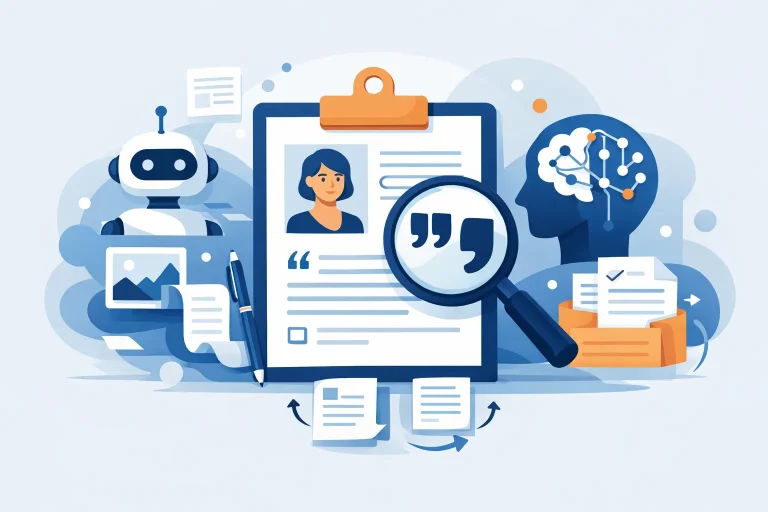

In an era dominated by artificial intelligence, the ability to discern between human writing and AI-generated text has become increasingly critical. As AI models like ChatGPT continue to advance, so too does the sophistication of AI detection tools. Enter AI humanizers, promising to bridge the gap and make AI content indistinguishable from human writing. But you might ask yourself why AI humanizers don’t work but fail in their mission?
This article explores the effectiveness of these tools, examining how they actually work, their intended purpose, and whether they can truly beat the increasingly discerning AI detectors.
Understanding AI Humanizers
What Are AI Humanizers?
AI humanizers are AI tools designed to rewrite AI text, aiming to make it sound more human-like and less robotic. The core function of a humanizer is to take AI-generated content and transform it to bypass AI detection systems, using techniques such as:
- Altering sentence structures
- Adjusting word choices
- Modifying the overall writing style
The ultimate goal is to ensure that the output reads naturally and avoids being flagged by detectors like Turnitin, GPTZero, and Originality.AI. By using AI humanizers, individuals hope to leverage the efficiency of AI to write while maintaining the authenticity associated with human writing.
How Do AI Humanizers Actually Work?
AI humanizers work by employing a variety of techniques to simulate human writing styles. These techniques include, but are not limited to:
- Paraphrasing and replacing words with synonyms
- Varying sentence lengths to break up predictable patterns common in AI-generated content
These actions disrupt the identifiable patterns in AI writing, making it less likely to be flagged by AI detection tools. Some sophisticated humanizers also work with more subtle aspects of language, such as adding idioms or colloquialisms, to further humanize AI and evade modern AI detectors. The objective is to alter the text in a way that it no longer scans for specific, easily detectable patterns associated with AI writing.
The Purpose of Using AI Humanizers
Here’s how AI humanizers address the rising demand for AI-generated content while navigating the complexities of originality:
- They rewrite text to emulate human writing styles.
- This allows users to utilize AI’s efficiency without the risk of AI detection.
This approach is valuable for various users aiming to bypass detectors like GPTZero and Originality.AI, ensuring the content appears original.
The Challenge of AI Detection
How AI Detectors Identify AI Text
AI detectors employ sophisticated algorithms to identify AI text by analyzing various patterns and characteristics inherent in AI writing. These detection models often scan for specific indicators such as predictability in sentence structure, repetitive word choices, and a lack of burstiness. Modern AI detectors are designed to recognize content generated by AI models like ChatGPT by identifying statistical anomalies and stylistic consistencies that are less common in human writing. These tools often look for patterns that emerge when AI is used to write, assessing factors like sentence length variation and overall linguistic diversity. The goal is to flag content that exhibits characteristics strongly associated with AI-generated text, helping to maintain the integrity of written material across different platforms.
The Role of Burstiness in AI Detection
Burstiness plays a critical role in AI detection because it reflects the natural variation and unpredictability in human writing. Human writing typically features diverse sentence structures and rhythms, with frequent shifts in complexity and style. AI-generated text, on the other hand, often lacks this burstiness, resulting in content that appears more uniform and predictable. Modern AI detectors are specifically designed to identify this discrepancy, analyzing sentence lengths, word choices, and other stylistic elements to assess the level of burstiness. By measuring how much a text deviates from a consistent pattern, these detection models can more accurately differentiate between human writing and AI writing, thereby improving the accuracy of AI detection.
Common Limitations of AI Detectors
Despite their sophistication, AI detectors have several limitations. One key issue is their tendency to produce false positives, where human writing is incorrectly flagged as AI-generated text. This can occur particularly with unique or unconventional writing styles that may not conform to the typical patterns analyzed by detection models. Additionally, AI detectors often struggle with nuanced content or text that has been heavily edited or rewritten. AI humanizers, which rewrite AI content to mimic human writing, can further complicate the detection process. As AI models and humanizer tools continue to evolve, staying ahead in the detection game remains a significant challenge. These limitations underscore the need for caution and critical evaluation when using AI detection, as AI detectors don’t work perfectly.
Why AI Humanizers Don’t Work?
Factors Leading to AI Humanizers Failures
Several factors contribute to why AI humanizers fail to consistently bypass AI detection. One primary reason is the rapid advancement of AI detection technology. Modern AI detectors are becoming increasingly sophisticated, learning to identify subtle patterns and anomalies in AI-generated content that humanizers may miss. Another factor is the inherent limitations of AI models themselves. While AI humanizers attempt to rewrite AI text to mimic human writing, they often struggle to replicate the nuances, creativity, and contextual understanding that characterize genuine human expression. These shortcomings make it challenging for humanizer tools to consistently evade modern AI detection, leading to instances where AI content is still flagged as AI writing by detectors like GPTZero and Originality.AI. Therefore, understanding these factors is crucial in assessing whether AI humanizers can reliably humanize AI.
Case Studies of Failed AI Humanization
Examining case studies reveals instances where AI humanizers don’t work as intended. For example, a student using ChatGPT to write an essay, then employing an AI humanizer to rewrite the content, might still see their work flagged by Turnitin. Similarly, a content creator relying on an AI tool to generate blog posts, hoping to humanize AI with a humanizer, may find their articles penalized by search engines due to AI detection. These failures often stem from the detectors’ ability to recognize patterns that humanizer tools overlook. Tested several AI humanizers, but these tools failed when checked by modern AI detectors. These real-world examples underscore the limitations of AI humanizers and the challenges in consistently fooling advanced detection models. Therefore, it’s crucial to be aware of these potential pitfalls when considering using AI humanizers.
Improving AI Humanizers to Avoid Failure
To improve AI humanizers and minimize the risk of failure, developers need to focus on several key areas. One crucial aspect is enhancing the humanizer’s ability to understand and replicate the nuances of human writing, including burstiness, sentence rhythm and varied word choices. This involves incorporating more sophisticated natural language processing techniques and training the models on a diverse range of human-written texts. Another strategy is to continuously update the AI humanizers to adapt to the evolving capabilities of AI detectors, ensuring they can effectively rewrite AI content to evade detection. Additionally, incorporating user feedback and real-world testing can help identify weaknesses in the humanizer’s performance and guide ongoing improvements. By addressing these areas, AI humanizers can become more effective in their mission to humanize AI writing. Therefore, humanizer tools need to evolve continuously to stay ahead of modern AI detection methods.
Strategies to Beat AI Detectors

Effective Use of AI Tools for Humanization
To effectively use AI tools for humanization, one must understand the strengths and limitations of both the AI models generating content and the AI detectors trying to identify it. The goal is to leverage AI tools like paraphrasers strategically, rather than relying solely on automated processes. Begin by using AI to write a draft, then carefully review and rewrite AI content, paying close attention to areas that might get flagged. Integrate personal insights, anecdotes, and unique perspectives to infuse the text with originality. Furthermore, experimenting with different AI humanizers and detection tools can provide valuable insights into what works and what doesn’t. The key is to humanize AI with a blend of technology and human ingenuity. Ensure you use AI strategically and humanize AI pro. Using synonyms strategically and also to change sentence rhythm will reduce the chance of getting flagged.
Rewriting and Paraphrasing Techniques
Rewriting and paraphrasing are essential techniques to effectively humanize AI and evade AI detection. The aim is to rewrite AI text to make it indistinguishable from human writing. Begin by thoroughly understanding the original content generated by AI. Then, paraphrase sections using different word choices and sentence structures to increase burstiness. Rather than simply swapping words with synonyms, focus on rephrasing ideas in a way that reflects human thought processes. Incorporate transitional phrases, idioms, and colloquial expressions to further humanize AI pro. It’s also crucial to vary sentence lengths and complexities to avoid the predictability often associated with AI writing. By combining these techniques, you can effectively rewrite AI content and reduce the likelihood of being flagged by AI detectors. Ensure the rewritten content doesn’t scan for specific patterns. Use AI and humanize AI at the same time to ensure that it gets past the modern AI detectors.
Future of AI Writing and Humanization
The future of AI writing and humanization hinges on the continuous evolution of both AI models and AI detectors. As AI models become more sophisticated, their ability to generate human-like text will improve, making it increasingly challenging for AI detectors to identify AI writing. Simultaneously, AI detectors will continue to advance, employing more nuanced and sophisticated methods to detect AI-generated content. AI humanizers must evolve in tandem, incorporating advanced techniques to rewrite AI content effectively. Future AI humanizers will likely focus on replicating the subtle nuances of human language, including emotional tone, contextual understanding, and creativity. Staying ahead in this dynamic landscape will require a deep understanding of both AI and human writing. As detection tools improve, so must humanizer tools to ensure that AI can be used effectively and ethically. This symbiotic advancement will shape the landscape of content creation and AI detection for years to come.
FAQ: Why AI Humanizers Don’t Work
Can an ai humanizer truly make text sound like a real person wrote it?
AI humanizers can change wording to appear less formal, but they often rely on swap synonyms and uniform sentence patterns that make outputs statistically predictable. While some tools like ReaLTtouch AI or modern paraphrasers mask pure AI fingerprints, a combination of training data biases and reliance on basic paraphrasers means the result still lacks nuanced human input, such as varied sentence length and organic restructuring of sentence architecture that a human writer naturally provides.
Why do humanizers are built around swapping synonyms fail to fool detection?
Many humanizers are built to rely on simple synonym replacement and minimal restructuring, which leaves statistical patterns intact. Modern detection tools like tools like GPTZero and other modern detection systems scan for specific words, token distribution, and sentence-level uniformity. When a paraphraser only performs synonym swaps, detectors pick up the underlying patterns and flag content as pure AI or statistically predictable.
Do paraphrasers that restructure sentence architecture make content less detectable?
Better paraphrasers that restructure sentence architecture can reduce obvious signals, such as overly formal phrasing or uniform sentence length, but they still often follow patterns derived from training data. Without genuine human input to vary rhythm, tone, and context-specific choices, even advanced paraphrasers can produce outputs that are less human but not indistinguishable from a human writer.
How does sentence length varies help or hurt ai humanizer effectiveness?
Varying sentence length is one tactic to make text feel more human because humans naturally alternate short and long sentences. However, many AI humanizers do not emulate this well and instead generate a uniform sentence structure that is statistically predictable. Tools that intentionally manipulate sentence length in realistic ways are more convincing, but again, the best results require human editing to avoid patterns that modern detection systems can still flag.
Are humanizers immune to modern detection and tools like gptzero?
No. Modern detection tools analyze multiple signals—from word choice and training data residues to rhythm and token patterns—that humanizers often do not fully address. Tools like GPTZero and similar modern detection algorithms are designed to detect statistical footprints left by pure AI outputs, and humanizers that rely on swap synonyms or simple paraphraser operations are especially vulnerable.
Can adding human input make a paraphraser-generated text indistinguishable from a human writer?
Yes, adding thoughtful human input—such as context-aware edits, deliberate tone shifts, varied sentence constructions, and content that reflects specific lived experience—greatly improves authenticity. Human input helps restructure sentence architecture, avoid overly formal or less human phrasing, and ensure the text reads like a real person wrote it rather than a paraphraser applying generic edits.
What are the limitations of basic paraphrasers compared to professional humanizers?
Basic paraphrasers often perform synonym replacement and minor rewording, which leads to predictable outputs that lack nuance. Professional humanizers or skilled human writers focus on narrative flow, voice, and context, avoiding statistically predictable choices. They also intentionally scan for specific words or phrases that detection tools might flag and make strategic changes beyond simple synonym swaps.
Should I avoid using humanizers for important content that needs to pass detection?
If the goal is to pass modern detection and to genuinely make content sound like a human wrote it, relying solely on humanizers is risky. Many humanizers are built to automate small edits and will produce content that scanners identify as less human. Combining AI tools with human editing and attention to elements like sentence variety, idiomatic phrasing, and original insights reduces risk and produces higher-quality results.
How can we humanize AI without falling into the pitfalls of why AI humanizers don’t work?
Humanizing AI aims to make interactions feel natural, but the core reason AI humanizers often fail is mismatch between appearance and capability: users expect genuine understanding and context when an interface “acts human.” To avoid disappointment, design should set clear expectations, surface uncertainty, and prioritize functional empathy over mimicry. RealTouch AI-style tactile metaphors or voice warmth can help, but they must be supported by transparent behavior so users know what the system can and cannot do.
Why does trying to humanize responses sometimes make AI less trustworthy?
Efforts to humanize can introduce overconfidence, hallucinations, or deceptive phrasing that implies internal states the model doesn’t have. When an AI “sounds” human, people may infer intent or expertise that isn’t present. A better approach is to make it sound more human in tone while explicitly communicating limitations, provenance of information, and uncertainty—this balances usability with honesty.
Can techniques like RealTouch AI or persona layers truly humanize an AI experience?
Techniques such as RealTouch AI, persona layers, or scripted warmth can improve the surface-level feel, but they rarely produce genuine human understanding. These methods can enhance engagement for specific tasks (customer service, onboarding), yet they are limited by underlying model accuracy and safety. Use such layers to augment clarity and accessibility—not to mask gaps in knowledge or reasoning.
What do product teams need to know about AI when they try to humanize interfaces?
Teams need to know about AI capabilities, failure modes, and user expectations. Key considerations include: identifying tasks where human-like behavior adds value, designing fallback flows for errors, logging and monitoring hallucinations, and creating guardrails for ethical concerns. “Need to know about AI” also covers transparency: make provenance and confidence easy for users to find so humanization doesn’t create false trust.
How can we make it sound more human while avoiding the common failures of AI humanizers?
To make it sound more human responsibly, focus on conversational clarity, consistent tone, contextual relevance, and explicit disclaimers. Use natural phrasing and empathetic language but pair it with clear signals about uncertainty and verification steps. Small touches—like adaptive formality and concise confirmations—can improve user comfort without overstating the system’s competence.
Are there ethical concerns when you humanize AI, and how should they be addressed?
Yes. Humanizing AI raises issues of deception, manipulation, and diminished accountability. Address these by disclosing the AI nature of agents, avoiding fabricated personal details, and not adopting voices or personas that could mislead vulnerable users. Policies should require transparency, opt-in for anthropomorphic features, and accessible explanations about how outputs are generated.
How do you measure success when you try to humanize interactions without repeating why AI humanizers don’t work?
Measure success using task completion rates, user satisfaction, error recovery time, and trust calibrated to accuracy (users neither over- nor under-trust the system). A/B tests should compare humanized versions with straightforward interfaces, tracking whether humanization improves outcomes without increasing misunderstandings or dependency on flawed outputs.
What practical steps help teams humanize AI responsibly during development?
Practical steps include: prototype lightweight persona cues, run usability tests focusing on expectation gaps, instrument for hallucination and misuse, iterate on tone based on user segments, and document limitations prominently. Incorporate feedback loops and include domain experts so the humanized surface is backed by reliable data. Remember that tools like RealTouch AI can enhance multimodal feedback, but they must be integrated with rigorous validation and user education so the system remains helpful rather than merely persuasive.