Artificial intelligence is rapidly transforming many industries, and the legal field is no exception. From automated contract analysis to predictive legal tools, AI in the legal system is becoming more common. One area attracting serious attention is ai court reporting, where advanced speech recognition and digital court transcription systems promise faster and cheaper transcripts.
Because of these developments, many people are asking a critical question: will ai replace court reporters?
Modern speech-to-text in legal proceedings is improving every year. However, the courtroom is one of the most demanding environments for transcription accuracy. In this article, we’ll explore how AI is changing court reporting, what court reporters actually do, and whether automation could realistically replace them in the future.
Short Answer: Will AI Replace Court Reporters?
No, AI is unlikely to fully replace court reporters in the near future. Instead, it will probably assist them.
Here’s why:
- AI transcription technology is improving, and tools like automated transcription software can quickly convert speech into text.
- However, court reporters do more than type — they manage the official legal record and ensure accuracy in complex legal situations.
- AI still struggles with accents, overlapping speech, and legal terminology, which are common in courtrooms.
- Human verification remains essential for legal reliability and admissibility in court records.
In the coming years, AI will likely support court reporters rather than replace them, creating a hybrid system where technology speeds up transcription while humans ensure accuracy and legal compliance.
What Do Court Reporters Actually Do?

Many people assume court reporters simply type what they hear. In reality, their role is far more complex and essential to the legal system.
Court reporters create the official written record of legal proceedings. This record becomes critical evidence for appeals, legal review, and historical documentation.
Real-Time Transcription in Courtrooms
Court reporters often produce real-time transcripts while proceedings are happening.
Using specialized stenography machines or voice-writing technology, they can:
- Capture speech instantly
- Provide live captions for attorneys and judges
- Record every word spoken in the courtroom
This real-time capability is vital when attorneys need to reference earlier testimony during the same hearing.
Creating Official Legal Records
The transcript produced by a court reporter is not just a rough draft. It becomes an official legal document used for:
- Appeals
- Case reviews
- Legal research
- Evidence documentation
Because of this, the transcript must be extremely precise.
Ensuring Accuracy in Legal Proceedings
Legal proceedings often involve:
- technical terminology
- fast speech
- multiple speakers
- emotional testimony
Court reporters must ensure that every word is captured correctly. Even a small error could potentially change the meaning of testimony or legal arguments.
This high level of responsibility is one reason the discussion about human vs ai court reporters is so important.
How AI Is Changing Court Reporting
The rise of AI-powered transcription has introduced new tools into the legal field. These systems aim to automate the process of capturing spoken words and converting them into text.
Speech-to-Text Technology in the Legal System
Modern speech-to-text in legal proceedings uses machine learning models trained on massive datasets.
These systems can:
- recognize spoken language
- convert speech into written text
- process audio recordings quickly
Courts are increasingly experimenting with this technology to improve efficiency.
Automated Transcription Software
Automated transcription software is widely used in industries like journalism, education, and business meetings.
Some systems can produce transcripts within minutes. However, legal settings demand near-perfect accuracy, which automated tools often struggle to achieve without human review.
Digital Court Transcription Platforms
Some courts now use digital recording systems instead of traditional stenographers.
These platforms record courtroom audio and then use legal transcription AI to generate transcripts afterward. Human editors usually review these transcripts to correct errors.
While helpful, this approach still requires human oversight.
Will AI Replace Court Reporters?
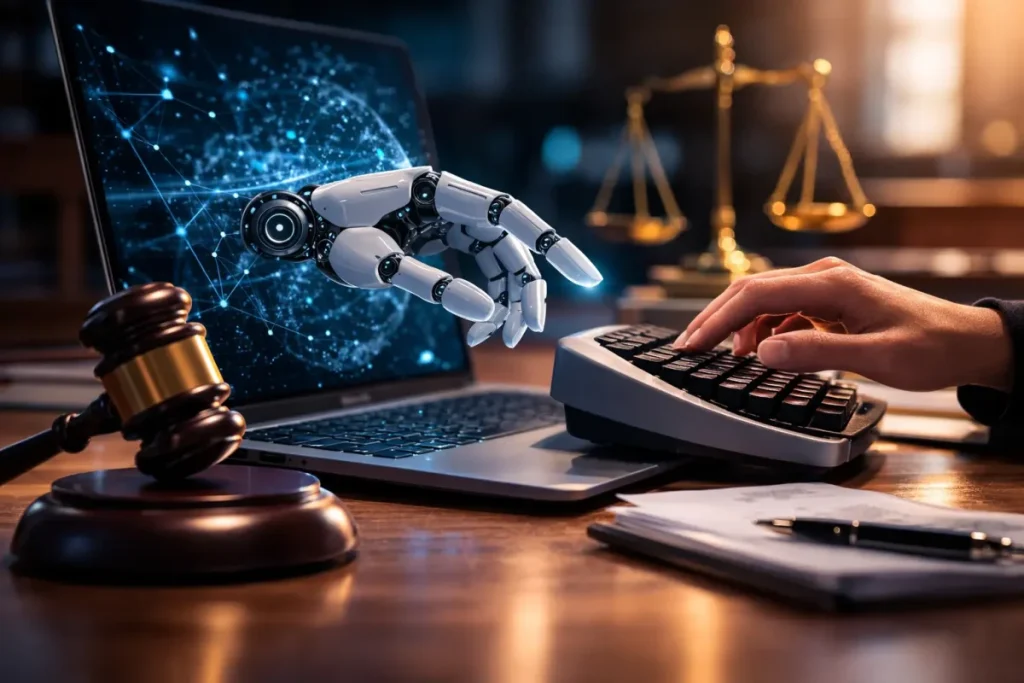
The central question — will ai replace court reporters — depends on both technology and legal standards.
AI Strengths
AI transcription tools offer several advantages:
- rapid transcription speed
- lower operational costs
- scalable digital storage
- searchable transcripts
These benefits make AI attractive to courts seeking efficiency.
AI Limitations
Despite progress, AI still struggles in complex environments like courtrooms.
Common problems include:
- recognizing multiple speakers at once
- understanding accents and dialects
- interpreting legal jargon
- distinguishing background noise
These issues make fully automated court reporting risky for legal accuracy.
Legal Reliability Concerns
Legal records must meet strict standards.
If an AI system produces errors, questions arise such as:
- Who is responsible for mistakes?
- Can the transcript be trusted in appeals?
- Is the technology legally admissible?
Because of these concerns, most experts believe AI will augment rather than replace human court reporters for the foreseeable future.
Human vs AI Court Reporters
Below is a simplified comparison of human vs ai court reporters.
| Feature | Human Court Reporter | AI Transcription |
|---|---|---|
| Accuracy | Very high with context understanding | Good but struggles with accents |
| Legal reliability | Trusted for official records | Often requires review |
| Cost | Higher | Lower |
| Speed | Real-time | Fast but may need editing |
| Context understanding | Excellent | Limited |
| Error correction | Immediate | Requires post-editing |
The debate between human vs ai court reporters reflects a larger discussion about automation in professional services.
What This Comparison Shows
While AI transcription is fast and affordable, humans still provide essential context and reliability.
Court reporters can recognize:
- sarcasm or tone
- overlapping dialogue
- legal terminology
These abilities are difficult for automated systems to replicate.
Advantages of AI in Court Reporting
Even if AI cannot fully replace humans, it still offers valuable improvements to the legal process.
Faster Transcription
AI can generate transcripts almost instantly from recordings.
Lower Costs
Automated systems reduce the need for manual labor in some situations.
Scalable Recording
Digital platforms can store thousands of hours of courtroom recordings.
Searchable Transcripts
AI-generated transcripts allow users to:
- search keywords
- locate testimony quickly
- analyze legal records efficiently
These features improve productivity for legal professionals.
Limitations of AI in Legal Proceedings
Despite its benefits, legal transcription ai has significant limitations.
Difficulty with Accents
AI systems often struggle with regional accents and dialects.
Overlapping Speech
Courtrooms frequently involve multiple people speaking at once. AI may fail to identify speakers correctly.
Lack of Contextual Understanding
AI transcribes words but cannot always interpret meaning.
For example, legal phrases or sarcasm may be misinterpreted.
Need for Human Verification
Most AI-generated transcripts still require human editing and review before becoming official records.
The Court Reporter Shortage Problem
One factor driving interest in court reporter technology is a growing workforce shortage.
Many regions report fewer trained court reporters entering the field.
Reasons include:
- an aging workforce
- lengthy training programs
- declining enrollment in stenography schools
This court reporter shortage has forced courts to explore alternative solutions, including digital recording and AI-assisted transcription.
How AI and Human Court Reporters May Work Together
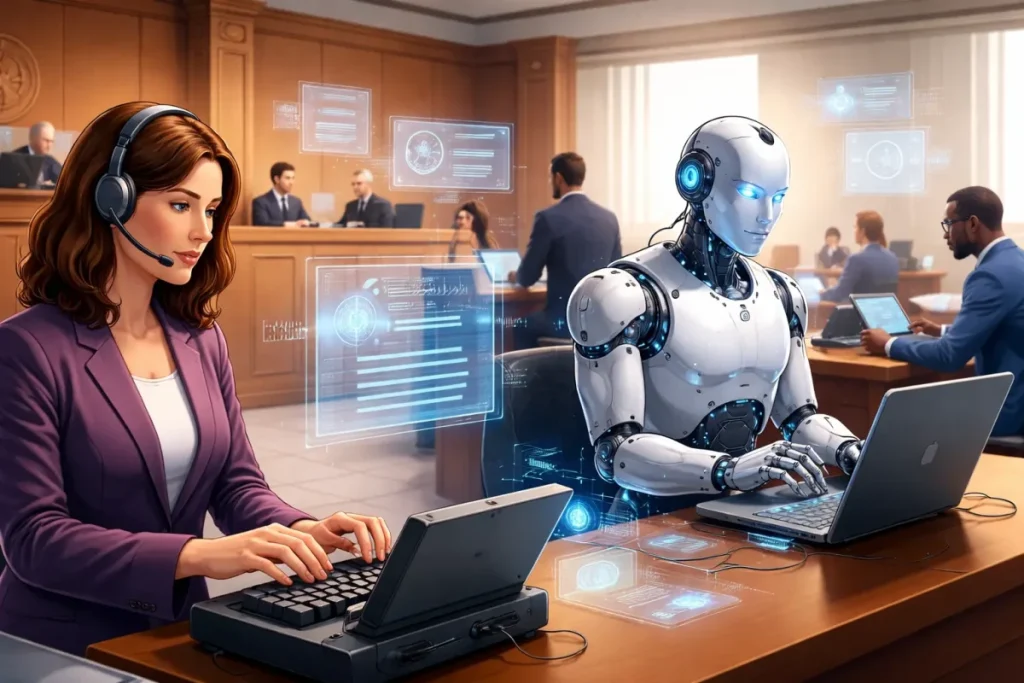
Rather than replacing reporters, AI may help them work more efficiently.
Possible hybrid models include:
AI Draft Transcripts
AI produces a rough transcript immediately after proceedings.
Human Editing and Verification
Court reporters review and correct the transcript to ensure legal accuracy.
Courtroom Monitoring
Humans oversee the process and intervene when technology fails.
This approach combines the speed of AI with the judgment of human professionals.
Many experts believe the future of transcription will involve a hybrid model.
Current AI Tools Used in Court Transcription
Several technologies are already used in courtrooms.
Speech Recognition Software
Advanced speech recognition systems can convert spoken language into text automatically.
Digital Recording Systems
Some courts rely on high-quality recording equipment instead of stenographers.
Transcription AI Platforms
AI transcription services analyze recorded audio and produce draft transcripts.
For more insight into how technology is transforming legal services, see this overview of AI in legal technology.
These tools are shaping the court reporting industry future.
Legal and Ethical Concerns About AI Court Reporting
AI adoption also raises important legal questions.
Privacy
Court recordings contain sensitive information that must be protected.
Reliability
Errors in transcripts could affect legal outcomes.
Legal Admissibility
Courts must determine whether AI-generated transcripts meet evidentiary standards.
Accountability
If AI makes mistakes, responsibility becomes unclear.
These concerns slow the full adoption of automated systems.
The Future of the Court Reporting Industry
The court reporting industry future will likely involve increasing technological integration.
Possible developments include:
- AI-assisted transcription tools
- hybrid digital courtrooms
- improved speech recognition models
- real-time AI transcription support
However, human professionals will likely remain essential for quality control.
Could AI Create New Roles for Court Reporters?
Rather than eliminating jobs, AI may transform them.
Future roles might include:
- AI-assisted court reporters
- legal transcript editors
- digital evidence documentation specialists
Court reporters could become supervisors of transcription technology rather than manual typists.
FAQs About AI and Court Reporting
Will AI replace court reporters completely?
No. AI can assist with transcription, but human expertise is still necessary for accuracy and legal reliability.
Is AI transcription accurate enough for courts?
AI accuracy has improved significantly, but errors still occur in complex environments like courtrooms.
Are courts already using AI for transcription?
Yes. Some courts use digital recording systems and automated transcription tools alongside human oversight.
Why are court reporters still necessary?
They ensure the official legal record is accurate, complete, and admissible in court.
How reliable is automated transcription software?
It can be reliable for basic transcription but often requires human review for legal accuracy.
Will the demand for court reporters decline?
Demand may change, but the need for trained professionals to verify transcripts will likely remain.
What skills will future court reporters need?
Future professionals may need:
- technology literacy
- editing skills
- legal knowledge
- experience with AI transcription systems
Final Verdict – Will AI Replace Court Reporters?
So, will ai replace court reporters?
The evidence suggests no — at least not anytime soon.
Artificial intelligence is already improving digital court transcription, speeding up transcript production, and helping address the court reporter shortage. However, courtroom environments remain too complex for fully automated systems to handle independently.
Human court reporters provide:
- contextual understanding
- legal reliability
- real-time judgment
- accountability for official records
The most realistic future is a collaboration between humans and AI. Technology will handle repetitive tasks, while skilled professionals ensure accuracy and maintain the integrity of legal proceedings.
In other words, the future of ai court reporting is not about replacement — it’s about partnership.